
Customers don’t think they’ve got a relationship with a channel. They think they’ve got a relationship with a brand.
 Tim FairsSenior Consultant @ SG-retail
A single purchase often moves between a phone and a store. A shopper might research a product online and then make the final choice standing in the aisle. Digital channels capture most of the data about that journey, while the store, where the decision gets made, has been much harder for brands to reach and measure.
That blind spot covers most of the market. Online sales in the US are growing faster than retail overall, but ecommerce still accounted for only about 17% of US retail sales in the second quarter of 2026, according to the Census Bureau. In the UK, the figure is about 27%, according to the Office for National Statistics. Retail media is starting to give brands a way into the rest.
Tim Fairs is a Senior Consultant at SG-retail, a UK consultancy that helps retailers build retail media networks and customer growth programs. He has spent about 25 years in retail marketing, with senior roles at ProCook, Bestway and McColl’s, and helped set up a retail media network at SPAR UK. He is now helping launch Smart Store Network, a retail media network for independent convenience stores. For Fairs, the starting point is how customers see a brand.
“Customers don’t think they’ve got a relationship with a channel. They think they’ve got a relationship with a brand,” says Fairs. Ecommerce gives shoppers reviews, video and detailed product information. The store offers advice from a person and the chance to see a product in hand. Retailers that let each channel borrow from the other give shoppers more reasons to buy in both.
Store meets screen
One way retailers can connect online and in-store shopping is by letting online shoppers video chat with someone in the store, especially before a big purchase. “If I’m buying a high-cost item, it’d be really good if I could have a video chat with a colleague in store. I get the benefit of almost being in the store, but I’m shopping online,” says Fairs. A quick conversation with someone who knows the product can answer the questions that stop a shopper from checking out.
The idea can work in the other direction too. Fairs raises the possibility of retailers adding QR codes to price tickets, so a shopper in the aisle can pull up a product’s online page before deciding. Those scans could also show a retailer which products draw the most interest in each store.
Fairs expects the payoff to reach both shoppers and retailers. “It would encourage people to spend more, the frequency would go up, and customers would be more satisfied because they’re using a channel they think is better,” he says.
Decided at the shelf
Many shoppers know what they need when they walk into a store but haven’t picked a brand. “I might think I need to buy some shampoo today, or the meal for tonight, but I haven’t necessarily made up my mind which brand to go for,” Fairs says. In-store advertising catches shoppers at that moment, which is why brands value it.
Large UK grocers such as Tesco and Sainsbury’s have sold that kind of advertising for years. Independent convenience stores, which many shoppers visit daily, have had few ways to do the same.
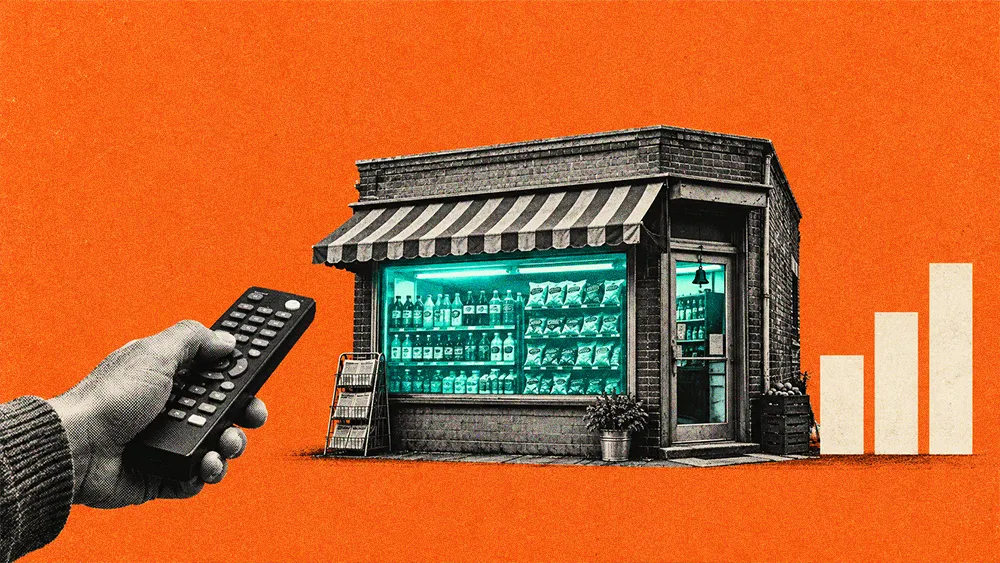
Smart Store Network, led by retail technology firm Rascal Systems with SG-retail and other partners, plans to launch with about 200 stores in November. The first phase runs on participating stores’ Facebook and Instagram pages, backed by paid promotion to reach people nearby, with in-store screens planned next. Store owners receive a share of the advertising revenue, and the network manages campaigns on their behalf. Fairs says posts from a familiar local shop tend to draw more engagement than the same message from a national brand account.
A shopper who sees the ad can find the product a few minutes’ walk away. “It drives traffic to the shops, which benefits the stores, and it benefits the brands because they sell more as a consequence,” says Fairs.
A widely used marketing principle holds that brands grow when shoppers think of them at the moment of purchase and can easily find them. Smart Store Network is designed around both. Participating stores see upcoming posts in advance and stock up on the featured products, so the item is on the shelf when shoppers come in. “There’s no point being aware of something if you can’t access it,” Fairs notes.
Hiring for warmth
In Fairs’ view, much of a store’s value comes from the people who work in it. “What I love about retail is that it’s a human experience. People will recall the interaction they had with a colleague in the store, and that can trump anything else,” he says. A staff member who offers useful advice or helps a shopper save money is often what a customer remembers most about a visit.
That puts weight on who a retailer hires. Product knowledge can be taught on the job, while kindness and empathy are harder to train, so those soft skills are worth screening for from the start.
The same care can carry into online shopping. Most retail websites follow a standard path from homepage to search to product page, and Fairs sees room to make those journeys feel more personal. “How can we make ecommerce more human, warmer and more engaging?” he says. Personalized messaging and AI-driven recommendations can give shoppers the kind of guidance a good store colleague provides, and they can serve far more people than any store team.
Measuring the handoff
Sales data shows what shoppers bought, and Fairs uses customer research to understand why. Large surveys show broad satisfaction trends across thousands of customers. Small groups of 20 or 30 allow deeper conversations about why someone browsed and left without buying, such as an item being out of stock or no one being available to help.
Watching shoppers directly can reveal even more. Fairs has used ethnography, which involves spending time with a family and observing how they shop. “A lot of the time customers will tell you what you want to hear, or they feel a bit embarrassed because they’re talking in front of other people. There’s no better way than living with a family and observing what they’re doing,” he says.
For ongoing tracking, he relies on Net Promoter Score. Retailers with high scores tend to grow through word of mouth. Retail media brings its own measurement. Where store sales data is available, brands get a report after each Smart Store Network campaign comparing sales in participating stores against similar stores that didn’t run the ads.
As stores take on the role of a media channel, what a shopper sees on a store’s social page and what happens at the counter start to shape each other. Fairs puts the customer at the center of every decision, online or in store. “If you lose the sense of the customer, or you’re not understanding what makes them tick, you’re going to be in a really tricky spot, and your competitors will take your market share,” says Fairs.