

All articles
As the AI-Driven 'Personalization Mandate' Takes Hold, The Best Brands Win With Proper Lifecycle Orchestration
Keri McGhee, Chief Marketing Officer at Attentive, on how AI and clean data help brands deliver relevant messaging that drives higher conversion and loyalty.
Make The CMO Wire one of your go-to sources on Google

Consumers aren’t afraid of personalization. They expect it. If they’ve given you their data, they are demanding you use it to treat them like you actually know them.

Marketing's old worry that personalization might feel invasive is fading fast, particularly among millennial and Gen Z consumers. More than 85% now assume that if they share their data with a brand, it will be used to recognize them, anticipate their needs, and deliver relevant offers. That expectation has reset the rules for marketers. The bigger mistake now isn't overstepping, but failing to show up personally at all.
That's the insight from Keri McGhee, Chief Marketing Officer at Attentive. With a record of driving growth at companies like Zillow Group, Tom Ferry, and Ethos Life, her work directly addresses this shift in consumer expectations. McGhee’s perspective on leveraging AI to enhance personalization in marketing is to avoid the dated fear mindset and focus instead on meeting consumer demand.
“Consumers aren’t afraid of personalization. They expect it. If they’ve given you their data, they are demanding you use it to treat them like you actually know them," says McGhee. So, where should a brand start? McGhee’s advice is to begin with a disciplined testing framework to build trust in the technology and understand how workflows drive outcomes. By starting small and validating that AI-generated messages outperform manual campaigns, marketers can then incrementally "turn up the volume." Adopting a disciplined testing framework doesn’t just improve campaigns, it transforms marketers from hands-on operators into strategic architects of customer experience.
Architects, not operators: AI enables marketers to step beyond repetitive campaign management and focus on shaping the bigger strategy. “The power of AI is that it operates around the clock, simultaneously managing multiple campaigns and journeys for different audiences in real time," McGhee explains. "These are tasks a human marketer simply can’t do at scale.”
For many of the brands winning with AI, success stems from a strategic mindset, not just new channels. Lifecycle orchestrations allow brands to send fewer, better messages by determining what not to send. The shift avoids messaging fatigue and the pitfalls of automated personalization that comes across as "sterile" or even triples the likelihood of customer regret.
Addition by subtraction: McGhee is quick to note that one of the great benefits of leveraging AI and true orchestration is that you can send fewer messages and instead just send the ones that drive the behavior you need. She highlights a common situation consumers are well aware of: message overload. “Some brands will continue sharing the same blanketed promo for days, and that’s not treating the customer or your audience like you know them,” McGhee says.
Personalization that drives value: According to McGhee, customers want to feel recognized. In her experience, if you ask customers for their preferences, sizes, or shopping interests, they fully expect you to act on this information to improve their customer experience. "It’s a missed revenue opportunity to continue to send generic messaging after you collect highly contextual data.”
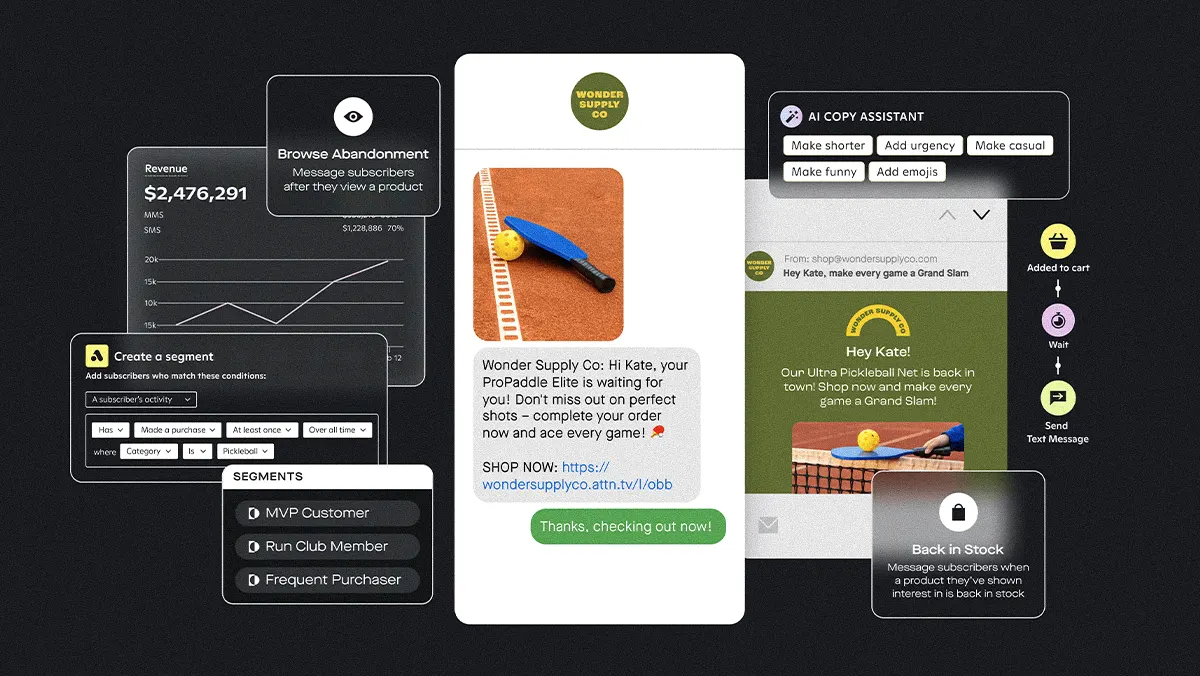
McGhee argues teams should reference the basic premise of marketing: delivering the right message, on the right channel, at the right time. True orchestration is about nurturing a person through their specific customer journey by delivering one-on-one connections. It means understanding a customer's behavior across all channels and tailoring the message accordingly, which often results in consumers who convert at a higher rate.
Three strikes, you're in: Successful brands understand that the customer journey isn’t linear and that each person engages differently across channels. "A customer might browse content for weeks on email but prefer to make the final purchase on their phone. It’s about applying that browsing history to the channel where they actually convert," McGhee explains. For other brands, the focus is retention. Once a customer buys three times, they know they have a loyalist. The strategy then shifts to exclusive drops, early access deals, and other tactics designed to keep them coming back.
When brands successfully orchestrate messaging, they see "insane results." These customer success stories show that when email and SMS work in concert, the power of both channels is magnified, leading to revenue growth. But these ROI numbers are impossible without one thing: a clean data foundation. AI is only as good as the data it acts on.
Proof in the numbers: The impact of properly orchestrated messaging is undeniable, turning coordinated campaigns into measurable growth. McGhee explains, “When you orchestrate across channels, both become stronger. For example, Crate and Barrel saw an 87% year-over-year boost in triggered email revenue, and Lands’ End added 30% more revenue in just weeks by connecting email and SMS.”
Garbage in, garbage out: AI can only be as effective as the data it’s given, and messy or inaccessible data will derail even the smartest automation. “If your data isn’t clean, trusted, and accessible, AI won’t deliver. Get that right, and it becomes a powerful growth engine.”
AI’s real-time capability is getting an upgrade with the adoption of new technology. McGhee points to the rise of Rich Communication Service (RCS) as one of several key messaging trends business leaders are watching, with companies like Attentive unveiling their own innovations in AI-powered messaging. The technology is designed to transform standard texts into interactive experiences where customers can browse product carousels and have a conversational exchange without leaving their inbox.
The era of generic messaging is over, and brands seeking to win with AI must start with clean data, disciplined testing, and a commitment to lifecycle orchestration. When those pieces come together, the impact moves beyond incremental optimization. "Once you unlock that, it can be a very powerful growth engine for marketers," concludes McGhee. The brands that get it right will use AI to make every message feel timely, relevant, and worth opening.