
All articles
Creator Programs Return More Value When Brands Build Communities Over Campaigns
Rami Saad, Co-Founder of Halo AI, explains what a CFO really asks when creator budgets grow, and which measures answer it.

Make The CMO Wire one of your go-to sources on Google

If you built the creator community, it's a living thing. The mobility of those creators shows you how they're progressing over time. For a brand, that's lifetime value.
At most brands, creator marketing still runs on the campaign calendar. A brief goes out, creators deliver, results land in a report, and the next campaign starts the process over again. The creator economy is projected to reach $44 billion in ad-driven revenue, and finance teams have now started asking what all that spending builds. A campaign report can't answer them, because it measures the burst and not the relationship.
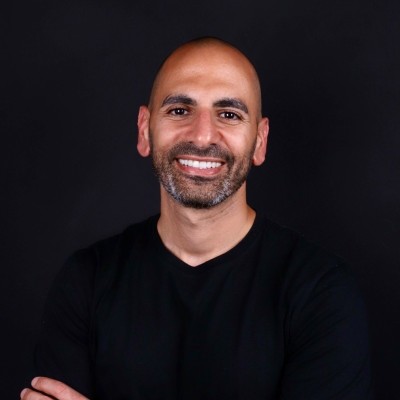
Rami Saad is Co-Founder of Halo AI, which builds AI agents for brand and creator collaborations. He spent seven years at Snap Inc. leading content and media partnerships across EMEA, where his team grew the platform's content ecosystem. Before that, he spent more than a decade building digital capability across the Middle East at Starcom MediaVest Group and DMS, on accounts including P&G, Samsung, and Emirates Airlines. Watching how hard brands and creators found it to work together is what pushed Saad to start the company in 2024.
"If you built the creator community, it's a living thing. The mobility of those creators shows you how they're progressing over time. For a brand, that's lifetime value," says Saad. He judges a program by what it leaves behind once the content is published. A brand that keeps working with the same creators ends up with people who use the products and can talk about them without a script.
The lifetime value question
A CMO at one of the world's three largest advertisers came to Saad after a meeting with his CFO, who had asked what the company's creator program was worth over the lifetime of a single creator relationship. The team was already rewarding creators who performed, handing them more work the way a loyalty program hands out tiers. Nothing in the reporting showed whether those relationships were worth more this year than last. "Others are just running campaigns, a burst of a campaign," says Saad. "The result sits in a performance report in a PDF that says, 'This creator was a superstar and we should probably work with him again.'"
Creators respond to that continuity as much as brands do. A creator who sees that bigger opportunities follow good work reinvests in their own production, and the brand gets better content the next time out. Creators who stay with a brand also learn the products, so their endorsement sounds like something they would have said anyway. "A relationship is when the creator is sensing that the more value they create, the more value they're receiving," Saad explains. "For the brand, it's when they're sensing that their creator program is alive and growing over time."
Two jobs, measured differently
Saad ties creator measurement to a CMO's own mandate. Brand building shows up in brand effects studies, where a team can isolate the lift in awareness, recall, and consideration that creators produce. Business impact runs on whatever metric the category already lives by, whether that's cost per first order at a delivery app or revenue per passenger kilometer at an airline. "As a CMO, you have two jobs. Build the brand and drive the business," says Saad. "They're not mutually exclusive, but they're measured differently."
Brand effects and business metrics both stop at the campaign, so Saad watches the community itself as well. He looks at how the roster grows year over year, who's climbing, who's slipping, and whether new creators keep coming in. Brands that watch that movement can plan across years, not quarters. "I would ask myself, what is the mobility of this community? How is the total community growing year over year? Are there winners and losers?" Saad notes.
Ad load and brand sensitivity
A long relationship carries its own risk, since a creator who talks about one brand constantly starts to sound like a spokesperson. Saad watches the ad load, meaning how much commercial messaging fills an hour of otherwise organic content. He also tells creators to talk only about the parts of a product they use themselves, because selective praise reads as honest and blanket praise doesn't. "Even if I'm in love with my iPhone, it would be excessive if I'm talking about it in my content once a day," says Saad. "Your credibility starts to decrease as a creator."
Saad's team also keeps brand safety and brand sensitivity apart. They work from the IAB's brand safety and suitability framework, which distinguishes content that breaches a standard from content that reads wrong for one particular brand. A creator up for a recent campaign had posted a meme three months earlier with audio touching on a sensitive subject, and the review flagged it before the brand made its pick. "The video was fully brand-safe, but we highlighted it to the brand as something that needed attention," Saad explains.
Gaps still left to close
Creator programs still can't move at the speed of the rest of the marketing stack. A paid campaign may go live quickly, while a creator campaign runs through briefing, discovery, negotiation, and approvals. Saad sees that gap narrowing, and he wants what those campaigns learn to feed the channels a brand already owns. "Right now, the marketing stack is really efficient. Your time to market is in minutes," says Saad. "That doesn't apply to creator marketing today."
Content a creator has already published is the fastest place to start. Creators posting about a product on their own can be asked for permission, and their videos can run as ads against the brand's audience. Saad would rather brands start there than with a brief, since the endorsement has already been made and the audience has already seen it. "People are already talking about your brand," he notes.
Saad expects a brand's creator community to be built mostly from nano and micro creators, who bring reach through numbers and credibility through proximity to their audiences. Working with them at that scale calls for clear contracting and prompt payment, since the terms a brand sets carry more weight for a creator early in their career than for a headline name. Saad treats those terms as the foundation the community rests on. "The big creators can fend for themselves. The small creators need us as an industry to come in, because their strength is in their numbers," Saad concludes.