
All articles
JCPenney’s Shoppable Runway Strategy Blends Brand Experience With Immediate Purchase
Michelle Wlazlo, Brand CEO of JCPenney at Catalyst Brands, says the company is aligning its physical and digital experiences around customer discovery and purchase.
Make The CMO Wire one of your go-to sources on Google

I want people to walk away and feel like they got to participate in something that’s usually out of reach. They’ll see incredible models walking the runway in fashion they can actually buy right now.

In Paris, Texas, JCPenney is reimagining the traditional runway show as a direct-to-consumer commerce engine. At the company's latest fashion event, attendees and online viewers can immediately click into the looks featured on the runway, browse the full outfit, and purchase items in real time from their phones. The activation reflects a broader effort by the retailer to collapse the gap between brand storytelling and transaction, turning a live fashion moment into a measurable driver of digital engagement and sales.
At the center of the strategy is Michelle Wlazlo, Brand CEO of JCPenney at Catalyst Brands. With a career spanning senior merchandising roles at retailers such as Target and Gap Inc., Wlazlo brings a seasoned perspective to the brand’s transformation. The Paris, Texas activation is one element of a larger marketing push, pairing partnerships and experiential campaigns with a renewed emphasis on fashion to reshape how consumers perceive the retailer.
"I want people to walk away and feel like they got to participate in something that’s usually out of reach. They’ll see incredible models walking the runway in fashion they can actually buy right now," says Wlazlo. The Paris, Texas show brings that idea to life as a fully shoppable fashion experience. For legacy retailers like JCPenney, the activation reflects a broader shift toward experiential marketing that connects brand storytelling, content, and commerce in a single moment.
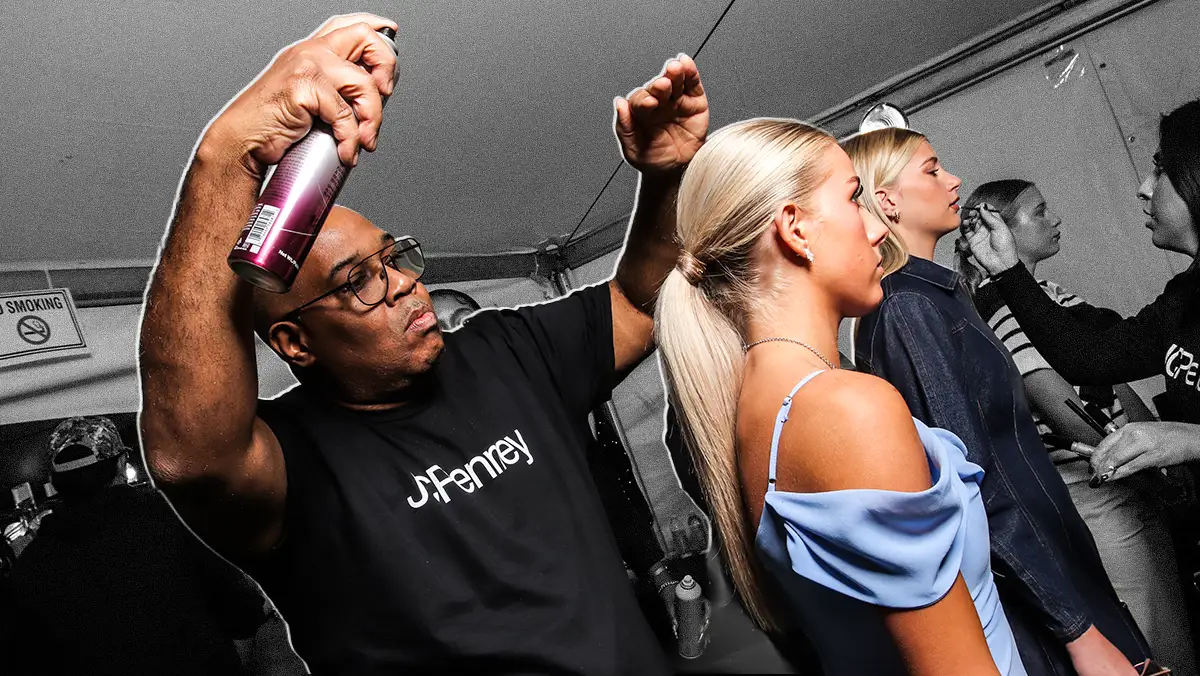
Hometown heroes: That focus on accessibility is reflected in the event's production, with the company using its own in-house talent and local residents to create an authentic experience that reflects the community it serves. "We are using real people from Paris, Texas, and some from Dallas, so it's really a community event, which is really nice," says Wlazlo. "Just like major fashion shows have a dedicated makeup and hair team, so do we. Our JCPenney salon and beauty team is doing all the hair and makeup for the event, which puts a bow on everything and makes it special for the participants."
Designed for discovery: The strategy is grounded in a pattern Wlazlo says the company sees often: once customers start browsing, they’re frequently surprised by the depth of the store’s assortment. JCPenney’s merchandising approach is designed to lean into that discovery, organizing products in ways that encourage a "while-I’m-here" mindset, prompting shoppers to explore related items and categories. "We work hard to be selfless in how we set up our store. We put all of our young women's clothing, things like Arizona, Aéropostale, dresses, and intimate apparel, into one adjacent area to encourage that behavior."
Digital dressing room: The digital experience follows the same principle, using merchandising cues that encourage shoppers to build on the item that first caught their attention. "The experience has to be about the customer's shopping journey," Wlazlo explains. "Online, when people click a featured outfit, we give them shoe and handbag recommendations so they could build from the one item they came for."
Wlazlo is quick to ground the strategy in JCPenney’s core identity as a fashion creator, pointing to its deep-rooted history as one of the "originators of private brands," powered by an in-house design team. It's a capability that allows the company to be with the trends instead of behind the trends. "Whether it's Claiborne or Worthington or Stafford, we've had some of these brands for decades," notes Wlazlo. "We have a full design team, from soup to nuts, designing everything with incredible quality. We've been a leader in this space for about a hundred and twenty-five years."
Style through synergy: The consolidation into Catalyst Brands further allows JCPenney to leverage its 650-store footprint as a distribution channel for sister brands, giving labels like Aéropostale access to markets they had previously exited. These kinds of authentic brand partnerships are presented as key to the new corporate synergy. "We carry Aéropostale not just because we're part of the same company, it's because we have many young fashion customers who really do want a broader choice within JCPenney," Wlazlo says.
The early results of JCPenney's new strategy are encouraging. The company pairs performance metrics with a structured feedback loop from a panel of brand "insiders," whose input helps ensure the assortment and messaging stay aligned with customer expectations. Together, Wlazlo says the latest signals point to a retailer that is beginning to rebuild real momentum. "We're on our nineteenth consecutive month of trip frequency. We are seeing our brand search for JCPenney increase significantly. Our loyalty has grown," she concludes.