
All articles
The RealReal Built an Artificial World to Sell Authenticity As the Ultimate Luxury
Team One CCO Chris Graves and Director Sebastian Strasser explain how The RealReal used an AI-generated film to prove that in a synthetic world, truth is the most valuable brand promise.
Make The CMO Wire one of your go-to sources on Google

You assumed everything was real in the past. Now you can no longer do that. For a brand that's all about authentication, that becomes the thing that makes them high demand.
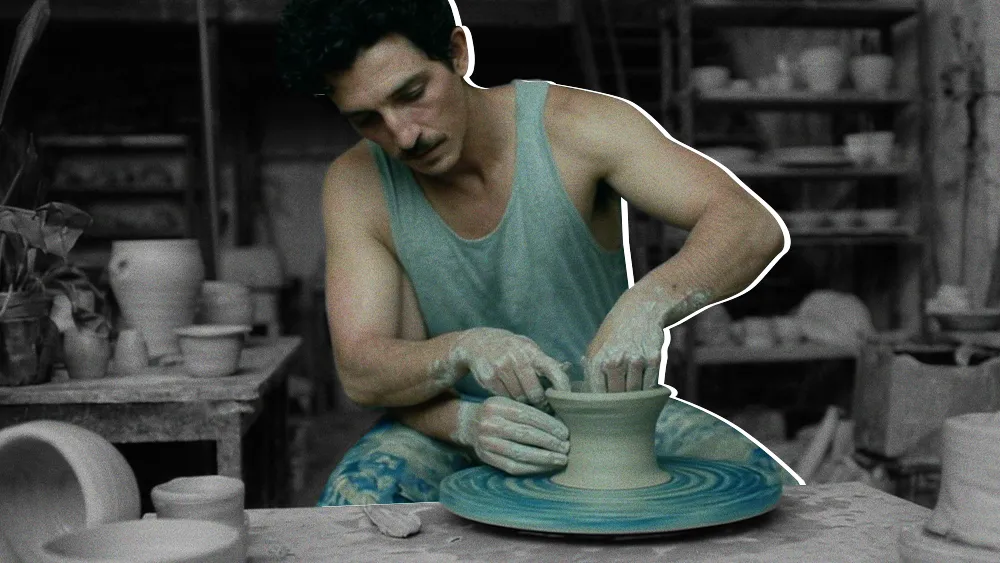
In a world where it's getting progressively harder to tell what's real, a company built on proving authenticity has something genuinely valuable to offer. That's the creative argument behind a brand film released by luxury resale platform The RealReal titled "L'ultimo Uomo Reale." Aptly timed on April Fool's Day, the film was almost entirely artificial by design, with a voiceover, music, and visuals all generated by AI. The only real thing was the bag. The film racked up nearly a million views, and its message landed well beyond the luxury resale category.
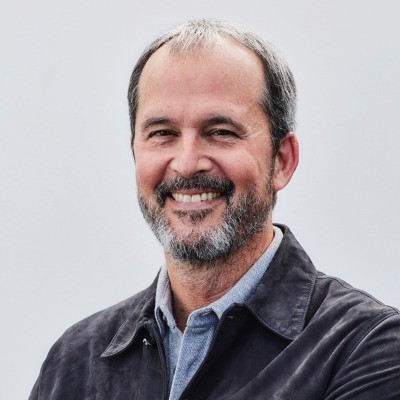
Chris Graves, Chief Creative Officer of Team One, spearheaded the project. Graves, who took on the role in 2003 following a tenure at TBWA\Chiat\Day, wanted to see what would happen if a cinematic storyteller took the wheel of a technology usually driven by technologists. To test the idea, he and his creative leads at Team One partnered with Director Sebastian Strasser, working with him to apply high-end film craft to a machine-generated canvas.
"The technology was there, but the actual execution wasn't being done by artists," Graves explains. "I'd always said that when artists actually get hold of AI and start to know how to use it, the work will get better. This project was about pairing a cinematic eye with the technology and seeing what would happen." In his view, the future of creative AI lies in a model where the machine provides the canvas but the artist provides the soul, intent, and crucially, the boundaries.
Craft First, Technology Second
For Strasser, directing an AI-generated film didn't feel like a departure from his process. It felt like doing what he always does, albeit under fundamentally different constraints. "It's the same job. Just harder and more work," Strasser says. "I'm used to working with Oscar-winning DPs, production designers, and stylists. Here, they're gone. No set. No actors. No crew adjusting lights. So you have to build that control yourself, from the start, in every detail." He describes AI filmmaking engines as unpredictable forces that require constant creative authority. "If you don't maintain control, the Sandworm, which is what I call these AI engines, takes over. It either eats the film or drops you somewhere in the desert and leaves you there."
The film was designed to hold together as convincingly real before gradually fracturing, revealing itself as artificial in stages. Strasser calibrated that transition with precision. "Like a lie," he notes. "At first it's convincing because it's small. You don't question it. So we started with things you could almost ignore. Then things you can't unsee. And once you notice, it's over. The system starts collapsing in front of you. That timing is everything. Too early, you don't believe it. Too late, you get bored."
Authentication as the Product
The creative concept worked because it mapped directly onto The RealReal's business model. Graves had been intrigued by the company's authentication process since early conversations with the client revealed an operational rigor he hadn't expected. "I had no idea they went to that level," Graves shares. "They have technology that scans metals and can tell you exactly what the alloy composition is in a buckle. If there's a certain percentage of tin, it's a fake. They do microscopic analysis of leather. These are things you can't see with the human eye."
That infrastructure, which processes hundreds of thousands of items, is the foundation of the brand's competitive position in a crowded resale market. Counterfeits are growing more sophisticated, and they affect every luxury brand. The RealReal's investment in authentication technology is what allows buyers to trust that a high-value purchase is genuine. "The reason you'd buy there is because you want to know you're getting the real thing. They have a bag guarantee and the technology to back it up, which proves they really care. I don't know if anyone else can say that," Graves says.
Real Is Now a Premium
Graves frames the broader cultural moment in a single observation: authenticity used to be an assumption. Now it's something brands have to earn and prove. "You assumed everything was real in the past. Now you can no longer do that. For a brand that's all about authentication, that becomes the thing that makes them high demand. For example, Hermès will only use a certain level of leather. That's what makes it luxury, because it's built in. When it's super easy to do something inauthentic, a lazy brand will default to whatever's easiest. A brand with a higher standard is going to make sure it's real."
Strasser sees the same dynamic from the creative side. AI removes production constraints and opens vast creative possibilities, but it doesn't eliminate the need for taste and vision.
The Lesson for CMOs: Live Above Your Category
Beyond the campaign, Graves advises marketing leaders that the strongest brands attach themselves to a cultural conversation that transcends what they sell. "Brands should live above their category," he contends. "The RealReal isn't just into reselling shoes and bags. They're into celebrating what's real. That lives above the category." He points to Dove's long-running work on real beauty, which has nothing to do with soap, and Tide's Olympic campaigns about how parents raise athletes, which transcend detergent. "If you're doing it right, your brand isn't just about the artifact you make. There's something about why you're doing it that gets turbocharged by a larger conversation." For The RealReal, that conversation is about trust in a world where veracity is harder to come by. The brand film makes the argument with AI tools and a real bag, but the lesson is bigger than any single campaign. In a market saturated with fakes and synthetic content, the brands that invest in authenticity will be the ones that endure.