
All articles
From Auras to Algorithms, Gen Z's Trust Architecture Is Reshaping Retail Marketing
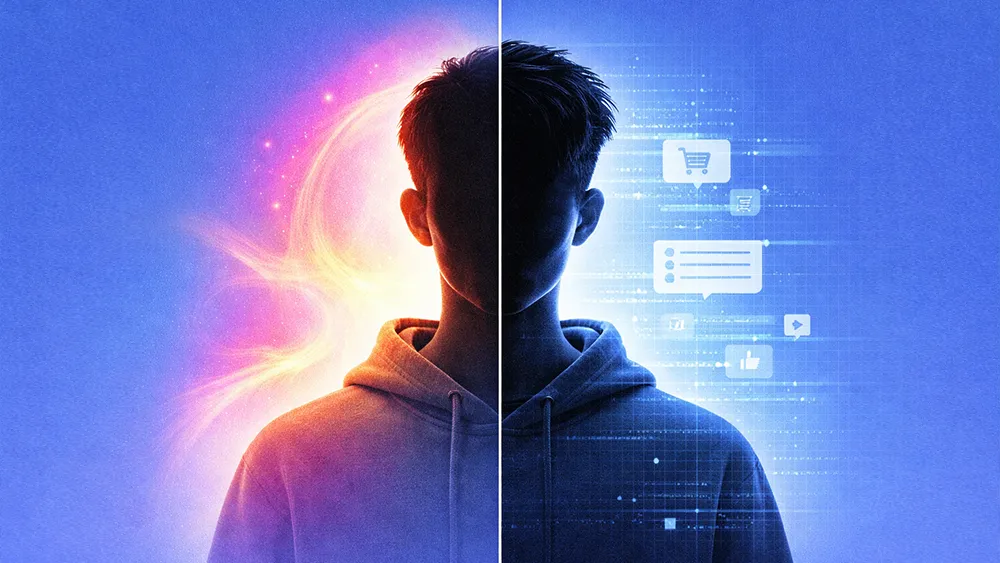
Gen Z demands a trust architecture that blends spiritual aesthetics with algorithmic precision, forcing brands to pair high-tech AI with human-centric authenticity.
Make The CMO Wire one of your go-to sources on Google

CMOs trying to understand Gen Z consumer behavior are justifiably confused by the apparent contradictions. This is the generation that simultaneously consults astrology apps before making decisions and expects hyper-personalized product recommendations powered by machine learning. Members of this age group crave authentic human connection, yet discover most of their favorite brands through algorithmically curated feeds. A few recent developments paint a more coherent picture of how brands can responsibly build trust with the next generation of consumers.
The aura economy: Aura readings are the practice of perceiving colorful energy fields believed to surround living beings. It's one of many Gen Z consumer touchpoints marketers are experimenting with, and mainstream enough that Ad Age recently covered it as a strategic brand trend. It's more than fringe. Brands across beauty, wellness, and lifestyle are incorporating aura imagery, color-personality mapping, and spiritual aesthetics into their campaigns.
More than just a consumer group: What's notable isn't any specific modality, but rather how Gen Z processes brand identity. For this generation, a brand that knows someone's aura color isn't substantively different from a brand that knows skin type through an AI diagnostic quiz. Both are expressions of the same desire to be seen as an individual as opposed to a marketing segment.
A brand that's executing on this generational intel is Sephora. The cosmetic giant's Sephoria event returned to Los Angeles this month, combining product discovery, community experience, and data-driven personalization into an immersive weekend for attendees who view beauty as a form of self-expression. The event is one example of how some of the most successful names in beauty are solving the authenticity-at-scale problem. Sephora's loyalty program drives the vast majority of sales not through discounts, but through personalization and gamification that makes each member feel uniquely understood.
The creator-CMO convergence: A parallel development is the rise of the creator-CMO. Marketing leaders who build personal brands, show up on social media, and function as quasi-influencers for their companies are a direct response to Gen Z's trust architecture, which places more weight on individuals than institutions. This is why the creator economy has become a $44 billion media channel, approaching the scale of television. Creators are trust proxies more than content factories. The brands that integrate creator relationships into their retention strategy are building the kind of authentic connections that Gen Z values.
For marketing leaders targeting Gen Z and Gen Alpha consumers, technology stack and brand strategy must be in alignment. The personalization your messaging platform delivers needs to feel genuine, not robotic. The community you build needs to exist in channels your audience actually uses, and for Gen Z, that means SMS and messaging, not just email. The creator relationships you invest in need to connect to your retention strategy, not just your awareness funnel. The brands that understand Gen Z aren't choosing between authenticity and algorithms. They're demanding both, at the same time, in the same message, through the same channels. Meeting that expectation is the defining challenge of marketing in 2026.