
All articles
Instant Discovery and One-Click Buying Force Brands To Rethink Loyalty Strategy
Charisma Glassman, Global Head of Retail and Consumer Advisory at Genpact, explains why retail success depends on moving beyond the purchase to build experiential loyalty at machine speed.
Make The CMO Wire one of your go-to sources on Google

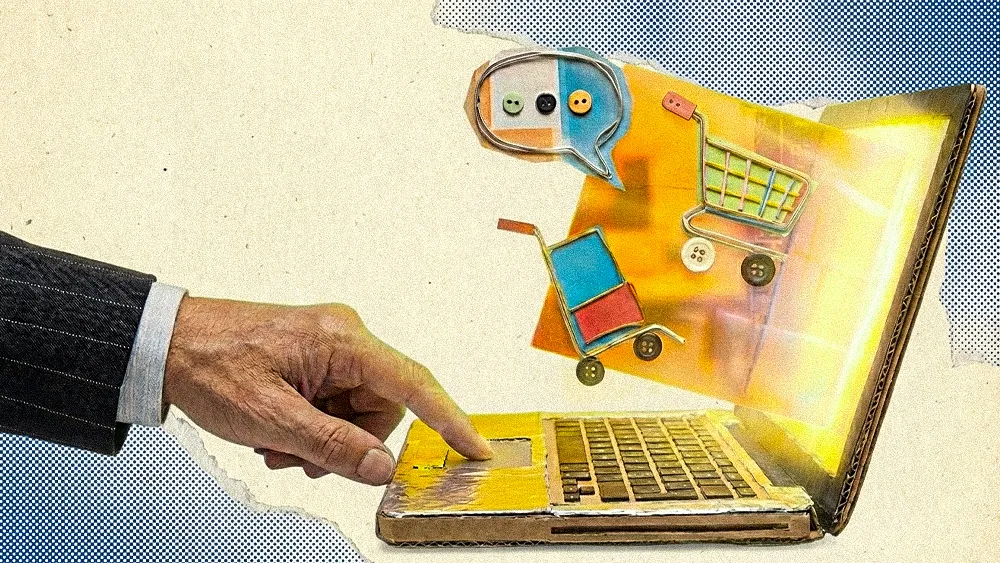
Discovery is a huge part of agentic commerce, and it's happening in the LLMs, in chat platforms, and in retail media networks.

The way consumers discover and purchase products is undergoing a fundamental transformation. Between AI-powered recommendations, social commerce, and closed-loop retail media networks, the path from discovery to checkout has never been shorter or more fragmented. As a result, companies face a growing mandate to actively re-earn customer loyalty through meaningful, non-transactional experiences that deepen connections beyond the point of sale.
Charisma Glassman helps brands navigate this evolving landscape. As the Global Head of Retail and Consumer Advisory at Genpact, she partners with Fortune 100 C-suite executives to lead AI and agentic transformation initiatives. Her enterprise strategy rests on a deep financial and operational background ranging from building data-driven customer journeys at Citi to leading a $100 million COVID-19 customer relief solution at Barclays. Glassman explains that because the window between seeing a product and buying it has dramatically collapsed, brands are aggressively reallocating capital to own the earliest moments of digital discovery.
"More brands are spending money on discovery and making sure those dollars are directed toward digital," she says. "Discovery is a huge part of agentic commerce, and it's happening in the LLMs, in chat platforms, and in retail media networks." That rising spend reflects a deeper anxiety about how brands can hold onto attention long enough to build loyalty in a world where consumers can find, evaluate, and buy a product in seconds.
The heritage advantage: In Glassman's view, the answer depends largely on what you're selling. She draws a sharp distinction between high-involvement and low-involvement purchases, pointing out that the loyalty challenge looks fundamentally different in each category. "When it comes to high-involvement purchases, like luxury retail and brands like Hermès and Chanel, you have hundreds of years of brand building history. The stickiness matters, and that traditional loyalty endures even as those brands constantly work to reach younger customers."
The eyeball battle: But for low-involvement categories, like grocery, personal care, beauty, and fast-moving consumer goods, Glassman says loyalty has become far more precarious. "There's a constant eyeball struggle. There's always a new cosmetic brand chasing teenagers or a new cereal fighting for shelf space. With low-involvement purchases, brands have to fight for attention every single day."
The metrics bear this out. Glassman says revenue remains the north star, and conversion rates at the bottom of the funnel are what ultimately matter for sales. But the battle is increasingly won or lost at the top of the funnel, where discovery happens and where loyalty is most fragile. For brands engaged in that eyeball struggle, her advice is to build communities and make the relationship about more than just purchasing. "The younger generations, Gen Z and Gen Alpha, really value authentic connection," she says. "It can't just be your traditional loyalty points. Don't make it transactional. Give them value for their time."
Cosmetic community-builders: Glassman points to Sephora as a brand that has mastered this approach. "Sephora won the market by building communities. They do cosmetic shows in their boutiques, in-store events, experiences that go beyond 'buy from me.' It's about genuine connection and giving customers a return on their involvement, not just their money."
Lessons in in-store engagement: She says Bloomingdale's is another standout, redefining what retail looks like by creating immersive experiences within its stores. Macy's has also done strong work blending digital and physical engagement through geo-targeted in-store offers and RFID-powered personalization. "Those location-based, contextual experiences really help bridge the gap between digital and physical," Glassman notes.
The VIP treatment: At the luxury end of the spectrum, brands are taking experiential loyalty even further, investing in invitation-only moments that deepen relationships with their most valuable customers. Glassman illustrates with a personal example. "I was invited to a Ferragamo wine dinner exclusively for loyal customers," she shares. "It was an intimate experience, and after that dinner, I completely shifted my mindset. I thought, 'I'm buying everything from Ferragamo now.'" She sees the same pattern across luxury, with Cartier hosting champagne nights and its Cartier Women series and Tiffany creating landmark experiences around its brand.
Delivering personalized, high-touch experiences requires data, and consumers are increasingly wary about sharing it. Glassman acknowledges the tension, but asserts that it's navigable when brands earn trust first. "If you've built that trust, customers are open to opting in," she says. "A wine company collaborating with a fashion brand or a champagne house partnering on an exclusive experience are examples of trusted collaborations that give customers something meaningful in return." The future of loyalty, Glassman believes, isn't about casting a wider net. It's about going deeper with the customers who already believe in your brand and earning their trust with every interaction, not just every transaction. "The brands that are winning are going above and beyond. It's not about the purchase or the transaction anymore. It's about the whole relationship."