
All articles
A Lab-Grown T-Rex Leather Handbag Is Rewriting Sustainability’s Role in Luxury
Bas Korsten, Global Chief Creative Officer of Innovation and EMEA CCO at VML, is using bold creative to reframe how sustainable materials compete in luxury.
Make The CMO Wire one of your go-to sources on Google

We wouldn't be talking if I had created chicken leather. You need to make a bold statement in order for people to look up and go, 'What? Did I hear that?' You need to come up with something that opens people's eyes.
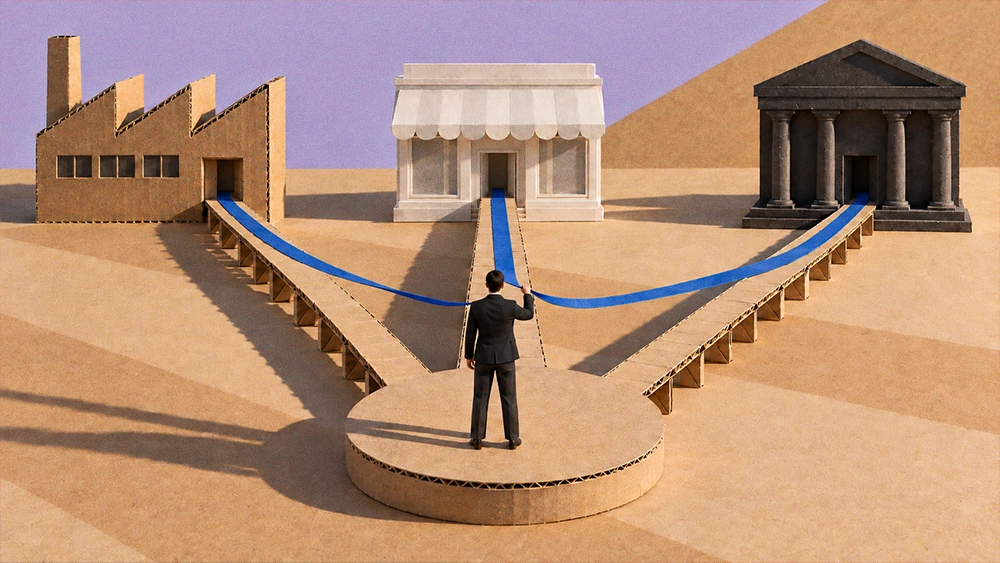
Sustainability brands often lose the positioning battle before it even begins. The moment a product enters the market as a substitute for something else, it inherits the perception of being second-best. In luxury, that dynamic is especially pronounced, where value is driven by status, rarity, and story, not rational tradeoffs. That helps explain why lab-grown materials continue to face resistance, and framing them around ethics or responsibility places them in competition with heritage goods on the wrong terms. When the purchase is a nearly $50,000 handbag, the decision isn’t being made on logic alone.
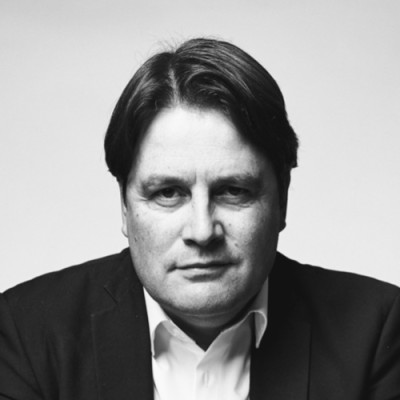
Bas Korsten, Global Chief Creative Officer of Innovation and EMEA CCO at VML, approached that friction as a positioning problem. The criticism that lab-grown materials lack history became the brief, leading him to look 68 million years into the past to reframe the narrative. Korsten has built a career on that kind of thinking. Named to Ad Age Creativity 50 and Adweek 10 Global Creative Leaders, he has led award-winning innovation at J. Walter Thompson Amsterdam and Wunderman Thompson, including projects like the Mammoth Meatball that use science to reshape how categories are perceived. His latest endeavor applies that exact playbook to the lab-grown luxury dilemma: a world-first luxury handbag made from lab-grown T‑Rex leather.
"We wouldn't be talking if I had created chicken leather. You need to make a bold statement in order for people to look up and go, 'What? Did I hear that?' It's such a learned behavior, and it's very hard to break out of. You need to come up with something that opens people's eyes," Korsten says. His approach is rooted in a clear luxury insight. Materials that can be replicated at scale tend to lose their sense of exclusivity and struggle to carry the same weight as heritage goods. That perception has shown up across the category, including comments from the CEO of Cartier who has dismissed lab-grown diamonds for lacking the history that gives luxury its meaning. By introducing something that doesn’t exist in nature, Korsten sidesteps that dynamic entirely. Lab-grown leather is no longer framed through comparison, but as a category of its own, one defined by rarity, story, and the kind of novelty only a lab can produce.
Rolling it back: Korsten sees the same positioning challenge across categories. In automotive, even well-reviewed EVs don’t automatically replace combustion engines. Rolls-Royce has stepped back from its 2030 all-electric ambition, signaling that demand doesn’t always follow innovation. Plant-based brands face similar friction, continuing to test ways to drive repeat behavior. In both cases, rational benefits alone aren’t enough to sustain preference. The opportunity is in repositioning, moving from obligation to desirability through more distinctive storytelling. "I think more industries could benefit from an approach where you say, 'Okay. Let's change your perspective by doing something that puts the whole industry in a new light,'" he notes.
Status over sacrifice: Earning enough attention to change how people view an entire category frequently requires a single, bold provocation rather than relying solely on safe, incremental tweaks. Korsten views consumer behavior through a blunt lens of behavioral economics: human nature prioritizes personal value over abstract moral good. "Because people are selfish, you need to create something that's better than the actual product for people to really change their behavior and change the way they eat or buy leather," he says. "You need to create an alternative that doesn't feel like a second-rate sacrifice."
Building a 68-million-year-old dinosaur bag takes a village and a lab. The project began with Korsten’s previous partner, geneticist Professor Ernst Wolvetang of the University of Queensland. Because T‑Rex DNA has long since disintegrated, the team turned to a scientific paper on fossilized collagen information, exactly the building block needed for leather. Wolvetang, working through The Organoid Company, handled the bioengineering. Korsten then partnered with Lab-Grown Leather Ltd. to grow those cells into usable material, and finally brought in avant-garde fashion label Enfin Levé to design the bag.
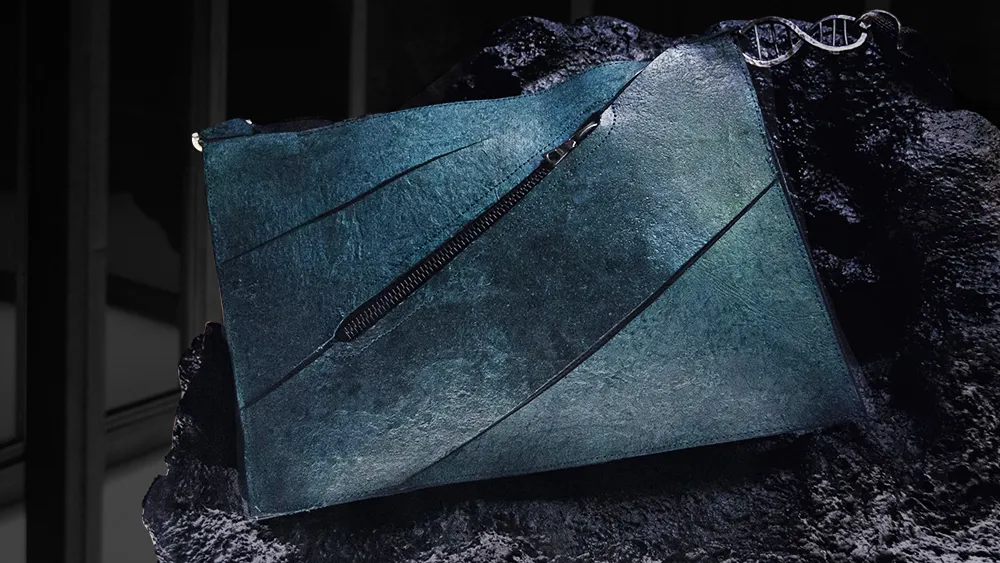
Jurassic marketing: The result is a piece designed to meet luxury expectations, with the texture, weight, and finish of a high-end object. It debuted as the centerpiece of a museum installation and auction in Amsterdam, with an estimated value of €575,000. The handbag serves as a proof-of-concept designed to drive earned attention and attract inbound interest from luxury houses. "Lab-Grown Leather Ltd. is a pretty young company. They don't have big marketing budgets, so they need a story that finds its own audience rather than paying a lot of money to reach those audiences," Korsten explains. "We needed to do something PR-worthy for the brand to be taken seriously in this space. Now we just need to ride the wave and make sure we turn the interest we've gotten into concrete requests and leads."
In the lab of luxury: For Korsten, there isn't necessarily a secret back channel or exclusive club for finding the right collaborators. Sometimes it just comes down to persistence and curiosity. "Something I've learned across these projects is that scientists publish their findings in scientific papers, but it never reaches the broader public unless it's wrapped in a story that is engaging and understandable. I love working with scientists because they're really anxious to get their stories out. There is a lot of willingness and yes-saying in the science space to work together with creatives. It's an interesting marriage, actually."
The project is already moving beyond provocation. Korsten says interest from luxury brands has begun to form a commercial pipeline, with partners exploring how the material could show up in their own product lines. The model draws on a familiar playbook: positioning the material as an ingredient brand, similar to how Gore-Tex evolved from a technical component into a recognizable name in its own right. "It's funny that Gore-Tex went from being a material used in other brands to becoming a brand of its own," he says. "But that's exactly how we were looking at it. Other luxury brands are now thinking, 'what can we create for our brand with this material?'"
Getting to this point required navigating the kind of resistance that often stalls bold ideas. Before securing the Amsterdam museum installation, the team faced multiple rejections from institutions hesitant to be associated with such an unconventional concept. Over time, that resistance became part of the story itself. "The reason we're all here today is because a lot of people said 'yes' when a 'no' was so much easier and more comfortable," Korsten concludes. "There's a lot of fear and anxiety in the world in general, but you don't get to projects like these if you're not willing to admit you don't know where you're going to end up. You just have to say yes and see where it gets you."