
All articles
Consumer Reports Is Building A Measurable Brand Playbook Without Losing The Halo Effect
Khalid El Khatib, Chief Marketing Officer at Consumer Reports, is building a measurable brand system with room for intangible impact.
Make The CMO Wire one of your go-to sources on Google

There's a 10-15% lift for people who have seen the ads, but there's also a halo effect with manufacturers reaching out and donors giving more . Those kinds of things aren't captured in metrics you present to the board.
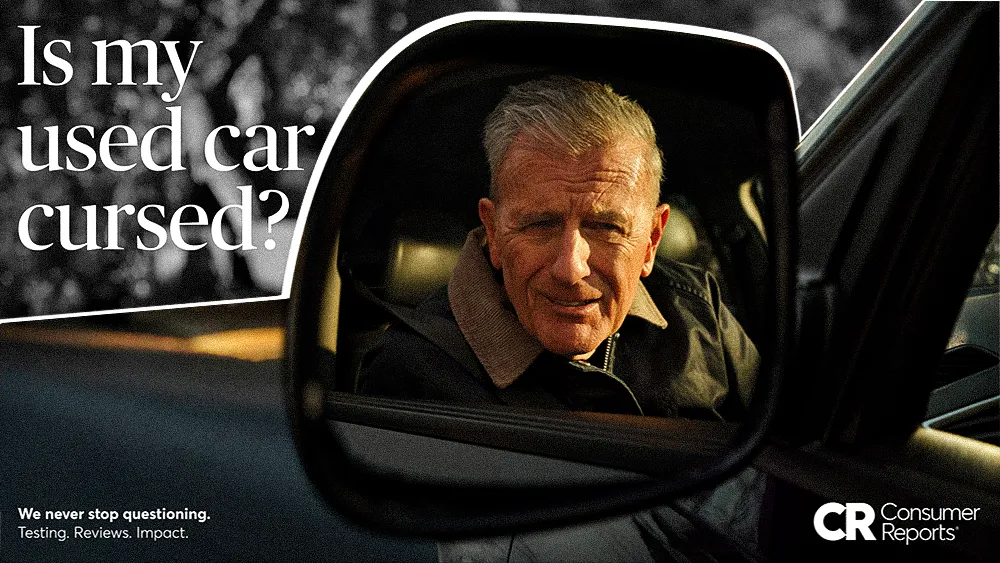
Running a measurable brand campaign is difficult in any organization. Doing it inside a 90-year-old legacy nonprofit requires a different level of structure. Consumer Reports is using its first major campaign in five years to build a playbook that connects brand investment directly to measurable outcomes. The effort comes at a moment of shifting audience behavior. Younger users are pulling back from traditional digital environments, while older demographics are becoming more active online. The We Never Stop Questioning campaign is designed to navigate both dynamics while reinforcing Consumer Reports’ role in an increasingly crowded, AI-influenced market.
Khalid El Khatib, Chief Marketing Officer at Consumer Reports, approaches the role like a systems operator. He oversees a $60 million budget and a 50-person team, applying a data-first mindset to a longstanding consumer advocacy organization. Previously at Stack Overflow, he helped scale marketing for a platform with more than 100 million monthly users and supported a $1.8 billion acquisition. At Consumer Reports, that experience translates into building measurable brand programs alongside modern digital products like the Ask CR chatbot and a redesigned app. The organization’s model reinforces that discipline: no advertising, full independence, and roughly $33 million spent annually on product testing.
"There's between a 10 and 15% lift across the board for people who have seen the ads, including a 10% lift in subscription intent. But there's also a halo effect when investing in brand. We've had manufacturers reaching out and donors giving more. Those kinds of things aren't captured in the metrics you're presenting to a board or a CFO," says El Khatib. He supports his approach with direct input from employees, donors, and core users, using those insights to inform how the brand evolves. From a CMO perspective, the challenge remains balancing measurable outcomes with less visible returns. In an environment where trust is a competitive advantage, not all brand impact will be captured in performance metrics.
Lead in the funnel: An unbiased testing model allowed the team to pull campaign messaging directly from high-intent consumer research. When the organization investigated lead in protein powder, AI-driven grocery pricing, and week-to-week peanut butter shrinkflation, El Khatib notes the high traffic and engagement provided the exact language for the ad copy. "Everything in the campaign was informed by data and what we saw really resonate with people over the past year. We saw millions and millions of people consume that content and ask those questions across our channels."
Boomers on the timeline: To distribute the campaign's message, Consumer Reports had to face a stark generational divide. El Khatib's team split their strategy by cohort, relying on a system that translates internal brand tracking and qualitative research into actionable channel decisions. Consumer Reports primarily targets its 65+ demographic with lower-funnel digital calls to action on Meta to drive subscriptions. It engages Gen Z and Millennials with top-of-funnel education, favoring newsletter sign-ups and chatbot trials as lighter entry points. "Younger people find themselves less and less online while older people, especially those 65 and older, are increasingly online," says El Khatib. "It's like my 82-year-old father scrolling TikTok while I'm sitting next to him trying to have a conversation. The switch has flipped."
The team designed its marketing engine to operate with a more modern agility. They continually test creative across specific DMAs like Miami, Phoenix, Chicago, and New York, adjusting the media mix on the fly based on real-time returns and seasonality. "That is the beauty of a campaign now relative to one from five or ten years ago," El Khatib notes. "You can recalibrate based on what you are seeing in the market almost instantly. That is even true of out-of-home advertising. You can flip a switch in a matter of days or hours now if a placement or a creative asset isn't working."
Algorithm aversion: For El Khatib, Consumer Reports' print resurgence is a bet on algorithm fatigue. Physical media provides a refreshing, less curated experience that stands apart from the hyper-targeted retargeting that dominates many feeds. He notes that there is something refreshing about getting a physical magazine in the mail and stumbling on an article about bug spray right before a summer hiking trip, unprompted by a tracking pixel. "There is always a fear within the media industry about abandoning print entirely, but I am all in on print. In fact, Consumer Reports left newsstands a couple of years ago and we just went back to Barnes & Noble last month."
The spreadsheet people: El Khatib is already planning for what comes next. As connected TV expands and AI-driven environments evolve, he’s watching for where new inventory and discovery moments will emerge. The campaign is designed to keep pace, turning new investigations into simple, direct questions that can slot into the same framework. This kind of flexibility also helps surface a core audience of highly engaged researchers who rely on multiple sources before making decisions. "We call them the spreadsheet people, the consumers who do deep research when they're buying a new car or an appliance," he explains. "They are going to use Reddit, they might ask ChatGPT, and they'll look at all the reviews on Best Buy and Amazon, but they are also going to use Consumer Reports. Those are our people."
Many marketers are balancing the pressure for immediate conversion with the longer-term work of building trust and authority. El Khatib believes that in an AI-driven landscape, the challenge is not just staying modern, but staying visible in a crowded, always-on environment. In his view, the role of marketing comes down to a simple but often overlooked principle "So much of marketing is just signaling relevance and reminding people that you exist," he concludes.