

All articles
As AI Reduces Execution Costs, Marketing Teams Shift Focus To Higher Impact Creative
Maggie Reznikoff, Chief Client Officer at Open Influence, shares how brands can use AI to move faster without losing the human touch.
Make The CMO Wire one of your go-to sources on Google

The brands that separate from the pack and stand out will be the ones that feel the most human. And it could be that they're human because of what AI enables them to do downstream, not in spite of AI.

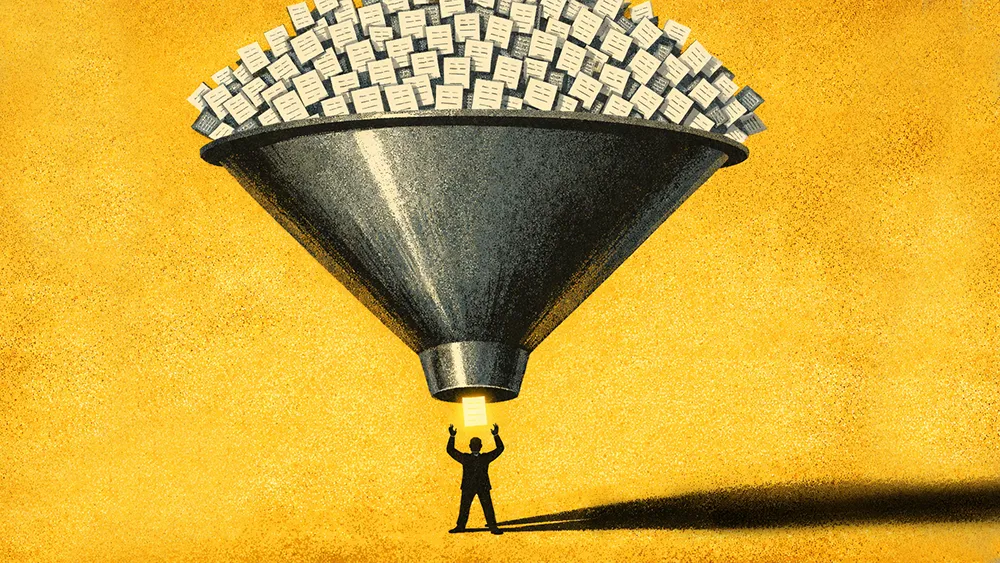
As AI becomes embedded across marketing workflows, the question is no longer how much content a brand can produce, it’s what’s actually worth making. With production costs collapsing, volume stops being a strategy. The advantage shifts upstream to human judgment, taste, and creative direction. The brands that gain traction will be the ones using AI to clear space for better ideas and more intentional storytelling, which builds real equity.
Maggie Reznikoff, Chief Client Officer at Open Influence, is working through these changes in real time. With more than a decade of experience across digital strategy and creator marketing, she has executed social strategies for brands including P&G, Netflix, Amazon, and Google. Today, she oversees tech-enabled service operations, giving her a front-row seat to how AI is being applied across campaigns. Her focus has shifted toward how that efficiency can be reinvested into more thoughtful, higher-impact creative.
"The brands that separate from the pack and stand out will be the ones that feel the most human. And it could be that they're human because of what AI enables them to do downstream, not in spite of AI," says Reznikoff. On the ground, that idea is showing up in more practical ways. As AI investment ramps up at the C-suite level, marketing leaders are feeling more pressure from finance and technology teams to drive efficiency. Instead of chasing fully autonomous systems, most are focused on what delivers value right now: using AI to speed up workflows, streamline production, and improve campaign performance in real time.
Rearview mirror metrics: For some marketing leaders, streamlining operations is becoming a way to reallocate time. The hours saved on downstream tasks can be reinvested into higher-quality storytelling. Reznikoff sees both the potential and the limitations of that approach. AI can quickly surface performance insights and audience signals, but because it relies on historical data, it tends to reflect what has already happened rather than what’s emerging next. "Another fine line is how to make sure you don't over-engineer against past learnings, and then lose that forward-looking cultural perspective of moments that AI can't predict," she cautions.
No bots in the boardroom: To manage that tension, Reznikoff's team draws clear lines around how AI is used. It plays a major role in areas like influencer discovery, helping teams move faster and process more data, while people stay in control of the decisions that require context and judgment. The approach is designed to protect the parts of the process where trust is most at stake. "What we won't do is have AI handling the back-and-forth on a sensitive issue," she explains. "If there's a change to a contract or the negotiations piece, we're always going to protect those sensitive pieces."
Baby steps: For clients who are cautious about automation, especially amid broader concerns around layoffs, Reznikoff takes an incremental approach. She focuses on small, practical use cases that demonstrate value without disrupting existing workflows, such as using AI to cluster a creator’s past content themes. From there, human judgment shapes how those insights are applied. "We'll use AI for small things, like influencer search, to identify key content themes based on their demographics that we should consider. Then, we bring in that human layer."
Beyond internal workflows, Reznikoff is closely watching how AI is reshaping the external landscape. Influencer marketing has long operated under strict disclosure rules, with regulators closely monitoring sponsorship transparency. AI, however, is advancing without the same level of oversight. As advertising begins to surface inside search and chat interfaces, questions around transparency are becoming more urgent. In response, Open Influence has updated its contracts to require creators to disclose the use of generative tools in their work. "I think there is a call for policy around disclosure, as well as name and likeness," she says. "I know Hollywood is distraught right now about what it's doing in the content space. Regulation may lag behind the tech, but there will be a spotlight on it for sure."
Feeding the machine: That focus on disclosure also connects to a bigger shift in how people discover content. As intelligent agents become part of everyday search, creator output is starting to shape what large language models surface. For marketers, that means thinking beyond social feeds and considering how their content shows up in AI-driven discovery environments, often called Generative Engine Optimization (GEO). "I do think creator content is going to become the bedrock of LLMs and really influence what people see when they're searching in ChatGPT," Reznikoff predicts. "Marketers are starting to think about how to reach someone's 'For You' page, but also how to create content that shows up in GEO. The next step is making that a full loop back into AI."
The pace of AI-induced change has been fast, resetting expectations across marketing teams in just a few years. The feedback loop between human creators, algorithms, and audiences reinforces why Reznikoff keeps returning to taste and trust. AI may accelerate production, but it still relies on past human output to learn, which makes distinctive content even more valuable over time. That dynamic places greater importance on the ideas and judgment that shape what gets created in the first place. "AI is compressing the workflow piece, like production and iteration, but it's expanding the premium that we're able to put on that taste and that judgment upfront," she concludes. "It's almost a shift of human focus."