
All articles
High-End Liquor Blends Craftsmanship with Culture in Artist Collaborations
From consumable to collectible, spirits brands are using packaging as a canvas for art, purpose, and long-term brand value.
Make The CMO Wire one of your go-to sources on Google

If you’re going to play around with art, we want to make sure that we have an artist that also shares our values.
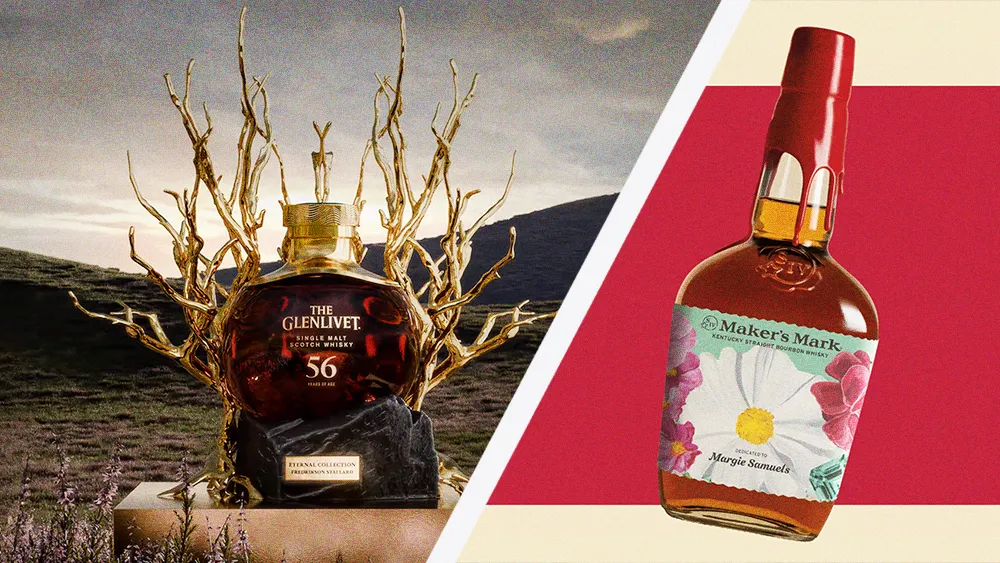
There's a growing trend in luxury liquor packaging where brands are turning their bottles into fashion statements, building relevance in diverse markets, from the high-net-worth collector market to broader consumer engagement through purpose-driven art. While The Glenlivet's Eternal Collection exemplifies this at the ultra-luxury end, with its 60-year-old sculptural piece recently selling at Sotheby's for £650,000, the same art-led strategy is also being scaled across broader audiences by brands like Maker's Mark, leveraging purpose and founder legacy.
Thomas Aastad, Culture and Creative Director at Pernod Ricard, overseeing Chivas Brothers, Irish Distillers, and North American Distillers, is leading the long-term cultural platform for The Glenlivet. His two-decade career includes serving as the Vice President & Global Head of Brand Experience at Swarovski, where he led the 2021 global rebrand, and a leadership role at LinkedIn, where he headed a $145M business transformation.
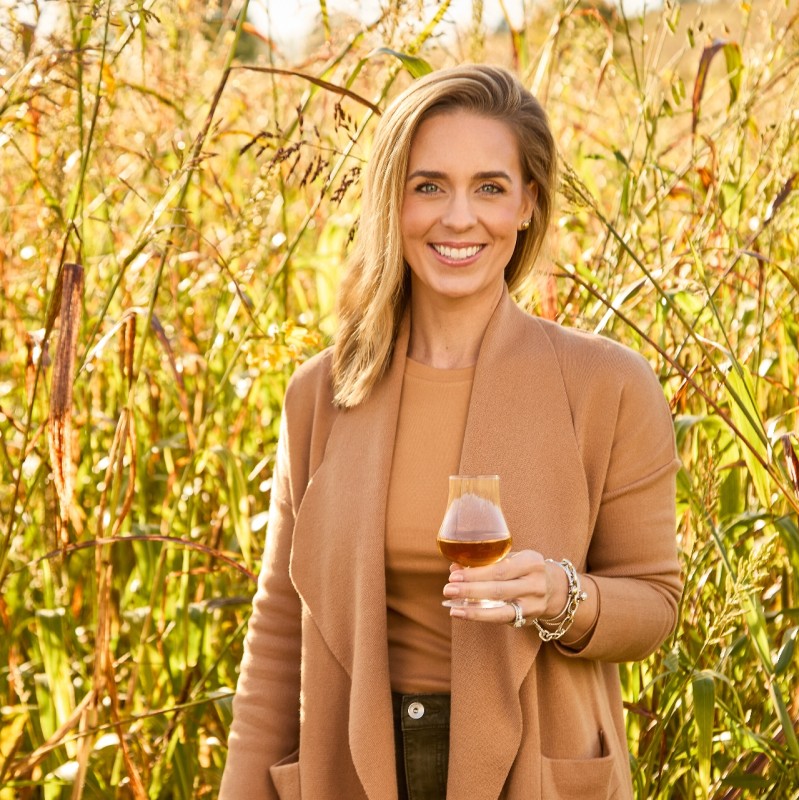
Valerie Netherton, the Director of Sustainability, Higher Purpose, and Partnerships at Maker’s Mark, sees artist collaborations as an extension of brand values. With more than 15 years at the brand, Netherton's deep understanding of legacy and purpose-driven strategy underscores all of her work. “If you’re going to play around with art, we want to make sure that we have an artist that also shares our values,” she says.
Artistic license: But this modern, art-led approach is actually built on a rich corporate heritage. For a group like Pernod Ricard, trusting artists is part of a DNA that stretches back decades, providing a foundation of legitimacy for today's most ambitious projects. "Our parent company, Pernod Ricard, has a long tradition of collaborating with artists, from Absolut with Andy Warhol to Perrier-Jouët. However, you still need to take a leap of faith because you're trusting an artist with your brand and their vision," Aastad says.
Product showcase: The art-forward approach aims to elevate the product beyond a consumable, positioning it as a piece of ultra-limited-edition sculpture. "The creation of that liquid started half a century ago. A product this rare and exclusive deserves something spectacular to tell the story of the liquid, the terroir it comes from, and the brand itself. That's how we landed on this collection being a series of editions, but always done in collaboration with artists," Aastad says.
The success of these collaborations hinges on finding the right creative partner. The brand's in-house team seeks artists capable of bridging the gap between its 200-year history and a modern aesthetic. The process is an immersive journey of discovery designed to yield an authentic interpretation of the brand's DNA.
"Many of the artists we work with are new to whisky, so it's a journey of discovery for them. They spend time in Scotland, where they explore the distillery, meet the people who make the whisky, and truly experience the brand, product, and environment. For the success of these collaborations, they need to feel authentic. On the day you launch, the artist needs to stand there and be proud of what they've created, and it needs to be authentic to their body of work," Aastad says.
The result is a new class of collectible assets, attracting a discerning buyer who mirrors collectors of fine art. The strategy's success is reinforced by the emergence of a secondary market and the unique psychology of its collectors.
The collector's calculus: To bolster their status, brands are forging partnerships with world-class institutions like Sotheby's, which provide third-party validation and build tangible credibility. "Whisky collectors are quite similar to art or watch collectors. Some buy multiple examples of the same release: one for their collection to keep unopened, a second for enjoyment, and a third for gifting," Aastad says. The brand's auction program with Sotheby's has been instrumental in solidifying its position in the high-luxury segment of whiskies, a strategy detailed in reports on the brand's ongoing Sotheby's partnership.
A rising tide: The ultra-luxury strategy extends far beyond a single product line, creating a powerful halo effect that elevates the entire brand portfolio. By anchoring the top of the market in exceptional craftsmanship, it reinforces the quality and heritage inherent in the brand's more accessible, core products. From there, consumers can build their taste profile and move up and down with the brand for different occasions. "Even our 12-year-old, which is most familiar to consumers, requires enormous craftsmanship," Aastad says.
The Glenlivet proves the model at the highest end of the market. But the core principles can be scaled. At Maker's Mark, the same "packaging-as-art" philosophy is applied through the lens of purpose and founder legacy. This intentional approach is deeply rooted in co-founder Margie Samuels, who not only designed the iconic bottle, created the name Maker's Mark, and developed the signature red wax, but also laid the foundation for the brand's deep appreciation for the arts. "It's very fitting if we're going to tinker with her art," Netherton explains. "If we're going to play around with her art, we want to make sure that we have an artist that also shares our values." This was key in their collaboration with artist Ashley Longshore for a Women's History Month label. Netherton describes Longshore as "so perfectly unreasonable" for her ability to shift from conventional art to creating her own "pop empire," balancing wit and whimsy in her artwork.
This alignment of values is central to Maker's Mark's purpose-driven storytelling. Every personalized label ordered triggers a donation to Vital Voices, an organization championing women's leadership globally. "This is our third year supporting Vital Voices," Netherton notes, drawing a parallel to Margie Samuels' pioneering role in the 1950s. "Her voice is something that's still being heard to this day and has opened so many doors for women in our industry." This commitment extends beyond partnerships; Maker's Mark achieved B Corp certification in 2020, integrating purpose into its operational sustainability and regenerative agriculture efforts. As Netherton emphasizes, "Higher purpose is not something that's just a bolt on. It's like truly in how we bring the brand to life, and again, really set by our founders vision and the DNA of the brand."
Planting the seeds: For Maker's Mark, these collaborations function as long-term brand infrastructure, not short-term campaigns. This reflects a "200-year vision" that guides the brand's decisions, from its 1,100-acre regenerative working farm to the world's largest white oak research forest. "The benefits are often, no pun intended, not felt by those who plant the seeds," Netherton says, highlighting the brand's patience and persistence in commitments like protecting and replenishing white oak for a century to come. This long-term approach resonates with a new generation of consumers who are "so curious about how things are made and the people behind and the value system behind those that are making things," Netherton observes.
Purpose-driven: Maker's Mark embraces this with full transparency, from sharing its mash bill to showcasing its zero-waste-to-landfill operations and making its B Corp assessment publicly available online. "When we have partners come visit the distillery, you know, they find their story in our story," she adds, emphasizing the power of connecting with others and sharing their journey. This approach transforms packaging into a platform for purpose-driven storytelling, as seen in campaigns like their "Spirited Women" initiative.
Ultimately, these initiatives show how packaging has become a strategic brand surface that fuses collectibility, cultural credibility, and community impact. Whether elevating ultra-luxury liquid or championing social purpose, the philosophy circles back to the idea that the art, the product, and the place from which they originate are deeply intertwined. As Aastad notes, "It's so crucial for the artists to experience it and learn the origins of this brand. It's been over 200 years in the making, and the landscape is obviously in the flavor of the product, and that really comes through in the artistic work that comes out of it as well."
For Maker's Mark, this means ensuring every collaboration, from the Ashley Longshore label to initiatives like the "Greats of the Gate" series, which honors iconic thoroughbreds and donates $400,000 annually to charitable causes in Kentucky, reflects its deep-seated values and commitment to being a "force for good in the world," as Netherton articulates. Both brands demonstrate that when packaging becomes a canvas, it not only tells a story but actively shapes a legacy.