

All articles
It's Fully Clear That 'Retail in the Age of AI' Is More Than a Catchy Conference Theme
Industry leaders are moving from AI experimentation to agentic execution, restructuring the C-suite and marketing budgets to gain a competitive edge.
Make The CMO Wire one of your go-to sources on Google

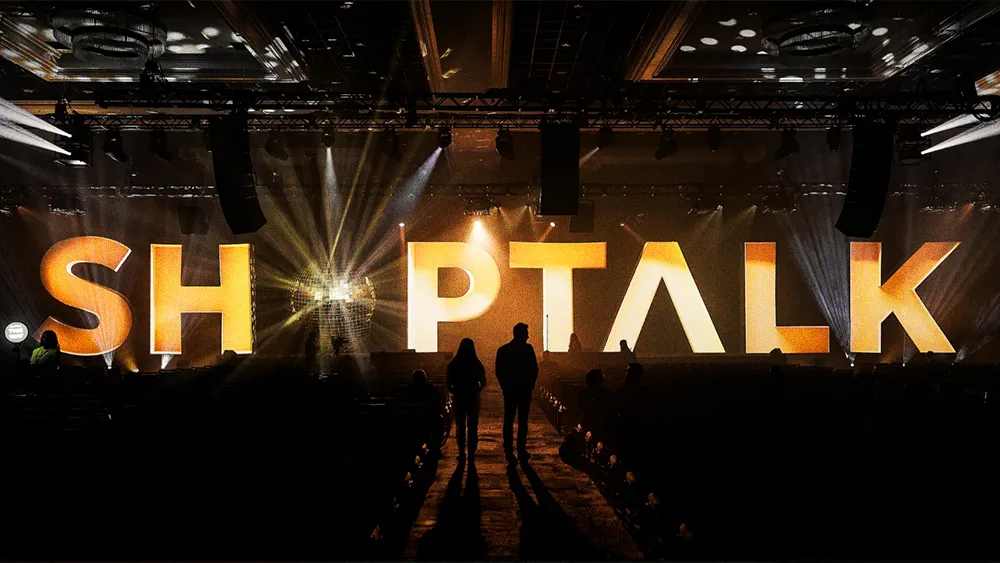
When Shoptalk titled its 2026 conference "Retail in the Age of AI," it might have been easy to dismiss as aspirational and opportunistic branding to capture an eager, forward-looking audience. Conference themes tend to lead the market, but developments from the past few weeks suggest that this time, the conference theme is actually trailing the reality that CMOs are seeing on the front lines.
The conference calendar is restructuring around AI: The IAB moved its NewFronts from the traditional late-April slot to March 23–26 in a structural acknowledgment that the buying cycle has changed. Digital investments now operate on an always-on cycle rather than the traditional broadcast calendar. But there's a subtler point buried in the agenda beyond content deals and streaming inventory, one that favors agentic AI tools, data partnerships, and commerce integrations.
IAB CEO David Cohen told The Drum something that should give every CMO pause: "A year ago, we were talking about testing and trials. Now, we are absolutely in the agentic age. There are many campaigns that are being executed agentically." When the trade association that represents the digital advertising industry declares that we've moved from experimentation to execution on agentic AI, the signal is clear.
Tracking the C-suite trends: The brands hiring new CMOs are explicitly hiring for AI-native marketing. Lands' End just named its first CMO in nearly a decade. Sarah Sylvester, who most recently led marketing for Victoria's Secret, was brought in specifically to drive "modern, data-informed storytelling" as part of the retailer's turnaround. On its own, a lone executive hire isn't a signal. But a pattern is emerging across the industry. Target named Michael Fiddelke as CEO in August, with the board citing its hopes that he'll "reestablish Target's position as a leader in the highly dynamic and fast-moving retail environment." Macy's, navigating a cautious 2026 outlook, is explicitly leaning into AI to drive efficiency, while Best Buy CEO Corie Barry said in March "As agentic commerce matures, we want to serve our customers in new ways, both on and off of platforms."
Converging theses: Target announced $2 billion in incremental investment for 2026, with AI personalization, loyalty, and owned-channel development at the center. Ulta Beauty's AI-powered personalization drove nearly 12% year-over-year sales increases. Sephora's global chief digital officer is headlining a discussion at Shoptalk alongside OpenAI's product partnerships lead. The executives being hired and the strategies being articulated share a common assumption: the marketing function itself is being restructured around AI capabilities. The CMO role and the C-Suite at large is being redefined by AI.
Meanwhile, the creator economy is projected to reach $44 billion in ad-driven revenue, and is increasingly being framed not as an influencer play but as a media channel that operates on the AI-native rails of algorithmic discovery, AI-matched creator partnerships, and agentic campaign execution. The brands investing the most aggressively in 2026 are all converging on an AI-first marketing architecture that connects personalization, owned channels, and data-driven orchestration. For CMOs reading these signals, the implication is real. "Retail in the Age of AI" is no longer a far-out aspiration. The brands that are hiring for it, investing in it, and restructuring their calendars around it are creating competitive separation that will be very difficult to close.