
All articles
Why Lasting Demand Comes From Building Cultural Relevance, Not Buying It
Dream Lab Studio Founder and CEO Louby Mcloughlin explains why immersive experiences and culturally fluent collaborations are the ultimate differentiators in the AI era.
Make The CMO Wire one of your go-to sources on Google

The reality is most of the industry is still set up to measure transactions, not perception, but brand moments are what actually create demand. If you only optimize for efficiency, you end up invisible.

Today's most exciting brands are finding ways to place themselves squarely in the middle of culture. In the past, brands could pay for proximity to influential people and communities to gain attention. But in an era where brand authenticity and trust mean everything, that model doesn't cut it anymore. It's not enough to be adjacent to culture; now, brands must live organically within the communities fans are actively building.
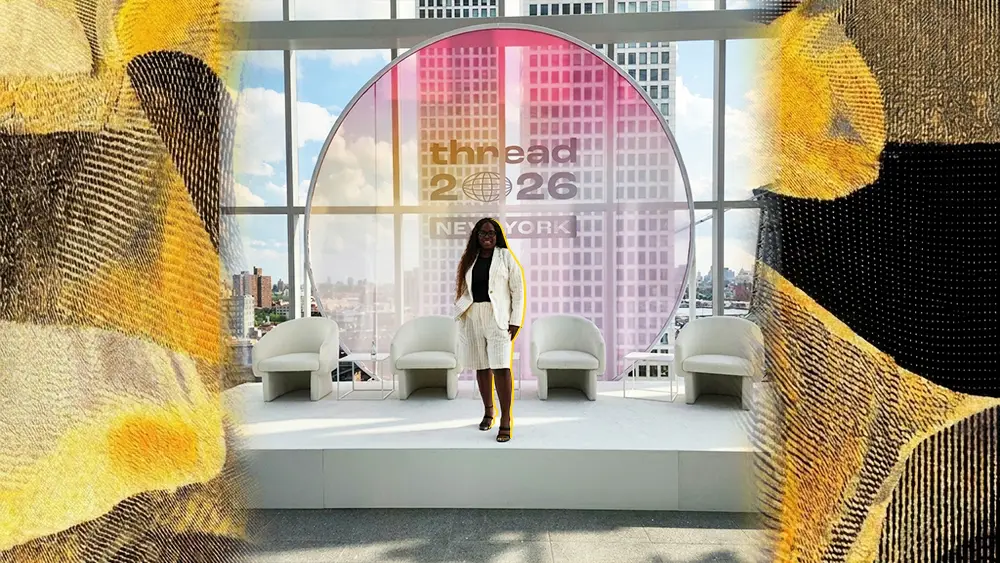
Louby Mcloughlin, Founder and CEO of London-based creative marketing agency Dream Lab Studio, is well-versed in creating brand moments that stand out. Since 2021, she has partnered with more than 50 global brands including TikTok, Tommy Hilfiger, Selfridges, Fendi, Ferragamo, and Mars, on campaigns generating an estimated 200 million content impressions. Drawing on her roots as a fashion editor at POP Magazine and founder of the creative platform OKgrl, Mcloughlin is an expert in merging the realms of fashion, beauty, and digital culture, a convergence many CMOs are currently working hard to navigate.
"The reality is most of the industry is still set up to measure transactions, not perception, but brand moments are what actually create demand. If you only optimize for efficiency, you end up invisible," she says. Discussions at industry events like ShopTalk 2026 suggest experiential loyalty beats discounts and points when it comes to cement brands' cultural relevance. The rising trend of beauty brands investing in sports shows what building cultural momentum looks like in practice. Mcloughlin's marketing framework focuses on what it looks like when a brand actually belongs in a space, participating in the rituals and energy that already exist within it.
Catching feelings: Building authenticity means finding moments brands can uplift existing communities and cultures. "We've moved past the point where people want to be sold to constantly," Mcloughlin says. "They want to feel something, and more importantly, they want to feel part of something. That's why sport is such a powerful entry point. It already has built-in community, emotional stakes, and that tribal energy brands spend years trying to manufacture."
Losing the logo slap: She warns if brand intentions feel phony, fans can easily tell. "Most brands still treat culture like a placement. They turn up, stick a logo somewhere visible, and hope proximity does the work, but it doesn't. Sport is emotional and identity-driven. You can immediately feel when something doesn't belong," she says, pointing to integrations like Sephora x F1 Academy, where beauty is embedded trackside and inside the experience itself.
Mcloughlin argues the most effective cultural marketing techniques today are fully immersive. Some brands are exploring through physical installations, like Sephora's Glam Bars at F1 Academy. Others are building out creator-led storytelling, like how e.l.f. beauty is with athletes like Flau'Jae Johnson, or Clinique's "Unstoppable Together" campaign that leans into real relationships and identity. At Dream Lab, she architects these moments by digging into behavioral science and neuromarketing to root ideas in human truth. In her playbook, casting plays a central role: people involved must embody the concept of the campaign rather than just promote it.
But building around moments rather than metrics can present conflicts in boardrooms. For many marketing teams, a tension frequently emerges between performance-driven tactics and long-term brand building, highlighted when Victoria's Secret's CEO recently called CAC as a singular KPI "dangerous." At a time when many teams still measure transactions, not perception, Mcloughlin prioritizes shifting how people see and feel about brands. She tracks signals such as conversation volume, creator adoption, and engagement with in-person activations to show how cultural relevance accumulates.
Return on reality: Mcloughlin argues that brand relevance is built in moments that are hard to measure and happen long before purchase. But investing in them matters. "CAC on its own is a very narrow lens because it only measures the outcome, not what created the demand in the first place. Performance marketing absolutely has its place. It converts existing demand, but brand moments are what create it," Mcloughlin says. "And when you build something with real cultural weight, you start to see compounding effects over time."
The Disney dimension: She sees this most clearly in large-scale collaborations. "Disney x Formula 1 is not one activation. It's a full ecosystem that includes fashion drops, fan zones, digital storytelling and physical experiences, all stitched into one narrative," she says. "That's what builds loyalty now. It's about participation in something that evolves over time."
That ecosystem mindset serves as a practical baseline as new technologies alter the industry's mechanics. With AI reshaping discovery and often acting as the front door to brands, many marketers find that polished content alone is rarely enough of a differentiator. As AI makes production faster and more abundant, standing out purely on looks and feel often becomes harder. In this environment, Mcloughlin's focus turns to the one thing algorithms cannot simulate: the physical energy of a shared experience.
Real recognizes real: "AI is going to make content faster, cheaper and more abundant than ever, which means content alone stops being valuable," Mcloughlin says. "When everything looks good, the differentiator becomes what actually feels real. That's why we're seeing this shift towards experiences, community, and more immersive brand worlds. You can't replicate the energy of being somewhere, or the feeling of being part of something people care about."
Multiverse of marketing: She suggests marketing of the future brings seemingly disparate worlds together. "Where this is heading is less about one-off collaborations and more about shared universes," she predicts. "Beauty, sport, fashion and entertainment are all merging into interconnected ecosystems where people enter through different touchpoints but end up in the same world. One world, infinite entry points."
For brand leaders, Mcloughlin notes, the approach requires thinking beyond isolated campaigns or tightly defined audience segments. It requires a powerful narrative throughline. "You need a story or point of view that evolves and gives people a reason to keep coming back," she says. "Because in a world where anything can be generated, the brands that win will be the ones that build something people actually want to step into."