

All articles
Ally’s 'Life Today' Platform Rebuilds Banking For The No-Checkbook Generation
Andrea Brimmer, Chief Marketing and PR Officer at Ally, is redesigning banking experiences around the realities of modern consumer behavior.
Make The CMO Wire one of your go-to sources on Google

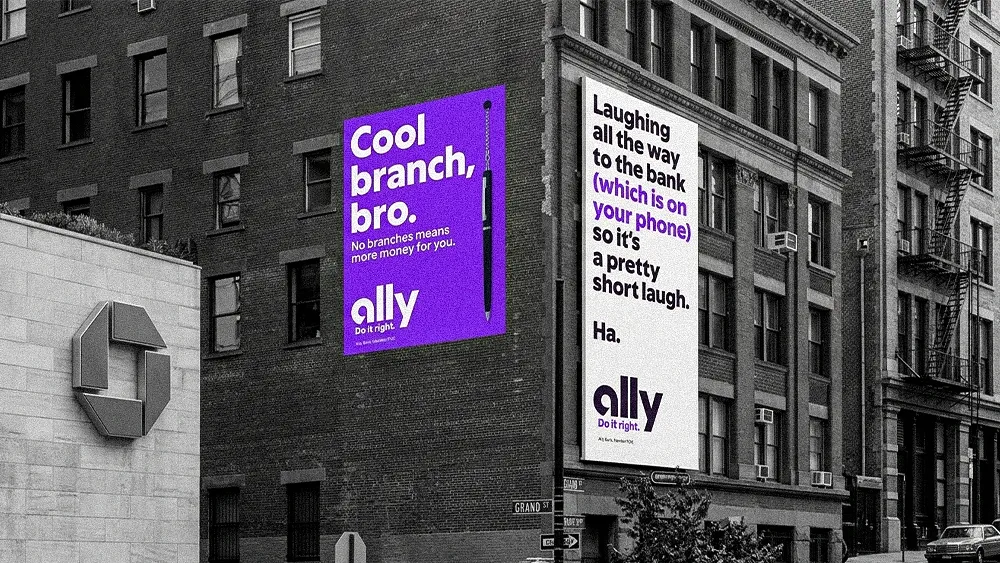
The idea behind the campaign is, 'How do we intersect the idea of where life and money collide?' We take the anxiety out of it and we show up as an ally.

The traditional banking playbook was built for a very different version of adulthood. Previous generations were often taught to move through a predictable financial sequence: buy the McMansion, stay with one employer, build toward retirement, repeat. For younger consumers, the path looks a little different. Gen Z and younger millennials increasingly prioritize flexibility, experiences, and financial survival in an economy shaped by rising costs and constant uncertainty. But while this audience is often digitally fluent and financially aware, that confidence frequently exists alongside deep anxiety. For consumers living paycheck to paycheck, financial tools need to feel less like rigid institutions and more like practical systems designed around the realities of everyday life.
Ally's Chief Marketing and PR Officer Andrea Brimmer has spent more than 18 years watching consumer expectations around money evolve in real time. At Ally, she helped build one of the first major digital-only banking brands at a point when many consumers still associated banking with physical branches and in-person service. Before joining Ally, Brimmer oversaw the $1 billion Chevrolet business at Campbell Ewald, navigating another legacy industry undergoing generational change. Her background shaped her broader view that modern financial brands increasingly need to mirror how consumers actually live, spend, and manage stress day to day rather than forcing customers into outdated banking behaviors.
"The idea behind the Life Today campaign is, 'How do we intersect the idea of where life and money collide?' We take the anxiety out of it and we show up as an ally," Brimmer says. That mindset represents a deliberate shift away from the more rigid, judgment-oriented tone that has long defined parts of the banking industry. Ally instead tries to meet consumers where they already are financially, focusing on digital tools and experiences that support real-world spending habits over policing them. "There's nothing worse than a bank telling you not to buy that latte, or not go on that vacation, or 'thou shall not spend'. I'm not here to judge, I'm here to help. We're building experiences and products that reflect your relationship with money."
Banking on a new generation
For Brimmer, modern banking starts with accepting that younger consumers no longer interact with money using the same vocabulary or behaviors older generations inherited. Ally Financial has leaned heavily into that reality as it pushes to become a primary everyday banking relationship for younger millennials and Gen Z consumers. "We don't even call it checking. We call it a spending account because checking is an archaic term," she explains. "Nobody is writing checks, nobody balances a checkbook anymore. You spend and move money, and money movement has become its own set of verbs. You Zelle. You Venmo. You PayPal."
This consumer understanding also shapes where Ally chooses to appear culturally. The company has built sponsorship relationships across women’s sports, NASCAR, and Major League Soccer while investing in podcasts, digital media, and other environments where younger audiences already spend time. Rather than treating sponsorships purely as visibility plays, Brimmer says the company views them as extensions of a larger strategy centered on relevance, accessibility, and meeting consumers inside existing habits and communities. "The way the younger generation moneys today is different than the way we used to money," she notes. "We have to recognize that, and I think that’s where we’re advantaged, especially being an OG digital bank."
The logic ultimately carries into Ally’s physical experiences as well. The company recently introduced a refreshed loyalty program alongside "Ally Houses" built at sponsored events, creating real-world spaces designed to feel more communal than corporate. Instead of functioning like traditional banking activations, the spaces are structured around hospitality, entertainment, and fan interaction. "It's a space where Ally customers can come, hang out, get free food, get free drinks, interact with athletes, see panels, and just have fun," Brimmer says.
Taking it personally
Behind Ally’s consumer-friendly digital experience sits a massive personalization engine powered by first-party behavioral data. The firm tracks signals like custom savings buckets, search intent, and customer interests to shape more tailored communication strategies across products, sponsorships, and media channels. That same thinking extends into the company’s sports partnerships, where campaigns increasingly adapt to specific fan communities through voices and athlete ambassadors tied to organizations like the National Women's Soccer League and the Women's National Basketball Association.
Brimmer says the rise of hyper-personalization also forces brands to constantly evaluate where relevance stops and discomfort begins. "We have data that would tell us when one of our customers got divorced," she notes. "But that crosses the line. There's a way to show up as an ally versus showing up as a creeper."
That concern increasingly shapes how Ally approaches AI integration as well. They view automation and predictive technology as tools that still require strong human oversight, particularly inside emotionally sensitive categories like personal finance. While AI can accelerate targeting and personalization, Brimmer argues that marketers still need people capable of interpreting emotional nuance, ethical context, and long-term trust implications that raw data alone cannot fully capture. "You still have to apply human judgment," she says. "There needs to be a human in the middle of everything making these kinds of decisions."
Redesigned for the real world
Ally’s new visual platform reinforces the same core idea driving the company’s broader strategy: modern consumers expect financial brands to reflect how life actually looks and behaves today. The brand originally stood out by embracing bold purple at a time when most banks looked visually identical, but years of fintech growth eventually diluted some of that distinctiveness as competitors adopted similar palettes and aesthetics. Brimmer says the redesign became an opportunity to modernize the system while reclaiming visual territory Ally helped popularize in the first place. "A ton of brands were taking a lot of our Ally Plum and our different colors—plum, grapefruit, seafoam—that we affectionately call our fruit salad," she says. "We just felt like it was time to visually make an evolution, and modernize. We felt like there was a great opportunity to reclaim a lot of what was rightfully ours."
A more emotionally honest aesthetic emerged from the redesign process as well. The updated system leans into bright purples, highlighter tones, and intentionally imperfect photography designed to resemble the messy, unfiltered nature of modern digital life. Rather than presenting consumers with overly polished financial imagery, Ally chose visuals that feel behaviorally familiar to younger audiences documenting everyday life through their phones. "The design is a reflection of life today," Brimmer concludes. "It's sloppy. It's messy. It's beautiful. It's fun. It's bold. It's contemporary. It's all the things that make up modern life."