
All articles
Brands Streamline The Marketing Stack And Bet On Owned Channels To Build Lasting Loyalty
Jon Knott, Director of Ecosystem Partnerships at Tapcart, says owned channels and a branded app let lean teams stop chasing attribution and deepen the customer relationship instead.
Make The CMO Wire one of your go-to sources on Google

Breaking through the fourth wall to create genuinely engaging, omnichannel experiences is an investment in your long-term brand and the strength of your community.

As budgets tighten and teams shrink, brand operators are consolidating their tech stacks to do more with less. Many now want a single place to run email, SMS, and push, where multichannel automations convert at a higher rate than single-channel campaigns, instead of straddling a separate dashboard for every channel.
Jon Knott is Director of Ecosystem Partnerships at Tapcart, the platform that turns Shopify storefronts into branded mobile apps. His team and Attentive recently launched an integration, announced on stage at Attentive's Thread conference, that lets brands run all three channels from inside the Attentive platform. Before joining Tapcart, Knott spent more than eight years inside the Shopify ecosystem, with earlier partnership roles at fulfillment platform ShipBob and marketing automation company Omnisend, the kind of point solutions that fill the stacks brands are now trying to streamline.
"Breaking through the fourth wall to create genuinely engaging, omnichannel experiences is an investment in your long-term brand and the strength of your community," Knott says. Owned channels are where that investment compounds, since they let a brand shape the experience instead of renting attention through paid media, and they turn one-off purchases into relationships worth deepening over time.
Getting there takes discipline about where a brand fits. The operators handling the moment well test which channels earn the strongest return for their own audience. Channel affinity varies from brand to brand, and the strongest teams apply the same rigor to their channel mix that they bring to the rest of their marketing.
Loyalty that lands
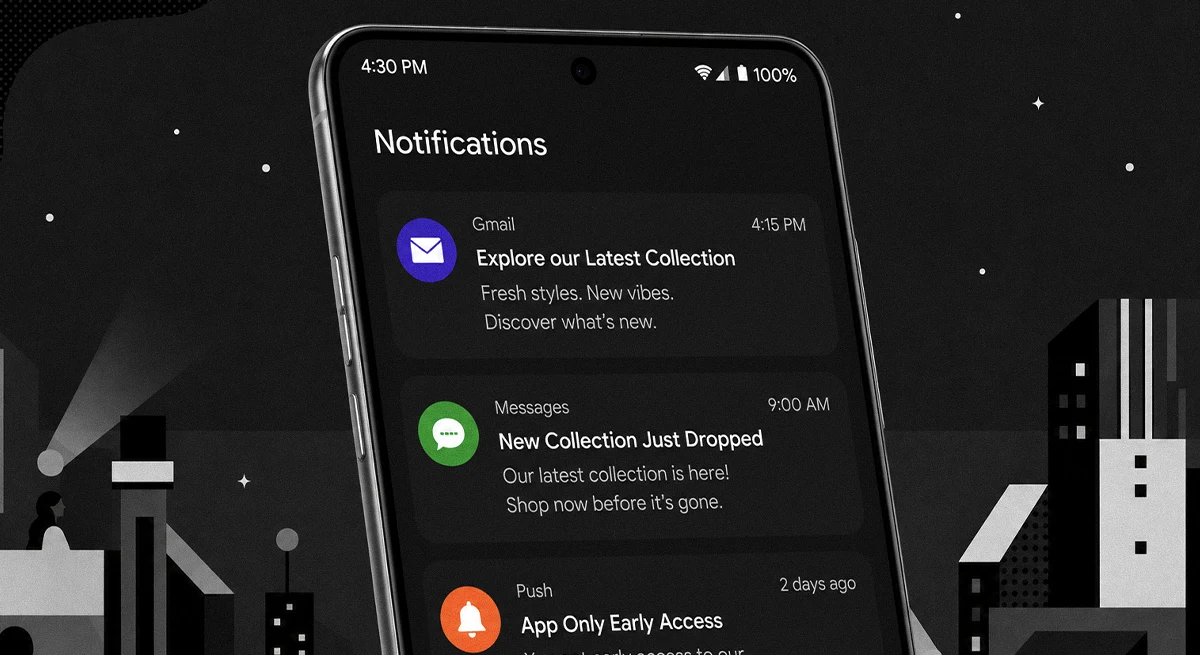
That rigor shows up most clearly in loyalty, where the strongest messages do two jobs at once, pairing something personal to the customer with a reason to come back. A recent text Knott received from Béis, the travel and lifestyle brand that uses both Attentive and Tapcart, shows how that works. It pairs his points balance with a new-collection announcement, attaching a reward he has already earned to a product the brand's data suggests he wants, and turns a routine promotion into something useful rather than pushed. "Serving up relevant products based on zero-party data and shopping behavior is now table stakes. Winning brands now use push notifications to spark action at the exact moment it matters, whether it’s before points expire, when a customer hits a loyalty milestone, or during an exclusive app-only event," Knott says.
Brands are also rethinking what loyalty means in the first place. Membership models are drawing fresh interest alongside the traditional points programs, and plenty of brands now run both. What that shift signals is that customers are looking for something a standard rewards tier does not deliver. The right structure depends on the audience, and getting there takes a round of honest soul searching about what a given brand's customers want.
Apps make it stick
The merchants that build on Tapcart each get their own branded app, and that app becomes the home base for differentiation. It gives a brand a controlled environment for the kind of experiences a website or a marketplace listing struggles to match, from members-only drops to live shopping, and it is where push notifications live. "The app gives a brand a way to build a VIP loyalty experience that customers can't get anywhere else," Knott says.
The customers who download a brand's app tend to be its most committed buyers, the ones who keep it on their home screen and open it on purpose. Reaching them with something exclusive deepens the relationship and lifts the lifetime value that any retention strategy leans on. In-app messaging extends that hold between visits, since shoppers can revisit offers and rewards inside the app even when push is switched off.
From screen to store
For retailers with a physical footprint, these channels reach beyond the phone. Geofencing lets a brand fire a message the moment a shopper walks near a store, turning location into foot traffic. "If you're within 1,000 feet of a Faherty store or a Windsor Fashions store, you get a push notification about a new collection, inviting you to come in, try on items from your wishlist or potentially offer 10% off an in-store purchase to drive retail foot traffic," Knott says. Turning a passing phone into an in-store visit closes a gap that has dogged omnichannel brands for years.
Pulling these channels together also reframes what a marketing team measures. The focus shifts toward the overall strength of the brand and the experiences it offers that rivals cannot easily copy. Crediting one channel for a given sale matters less when the whole system pulls in the same direction, and for lean teams that shift turns a scattered set of tools into a coherent way to grow.
The next test arrives with Black Friday and Cyber Monday, where relevance gets sharper and more personal as the era of the mega-influencer fades. Tapcart's response is a For You feed inside each brand's app. "The future isn't about mega-influencers. It's about relevance. Consumers are used to personalized feeds on platforms like TikTok and Instagram, where no two experiences are the same. They're starting to expect that same level of personalization from the brands they engage with, and Tapcart's new ForYouFeed delivers on the promise of true 1:1 personalization," Knott says.
The views and opinions expressed are those of Jon Knott and do not represent the official policy or position of any organization.