
All articles
Rinse's Bay To Breakers Activation Connects Brand Promise To Cultural Timing
Jennifer Betka, Chief Marketing Officer at Rinse, explains how cultural fluency, customer research, and brand discipline turn local activations into long-tail business value.

Make The CMO Wire one of your go-to sources on Google

The activation was designed to be a part of a cultural moment, build trust, and connect with the Bay Area in a way that respected their intellect and sense of humor.
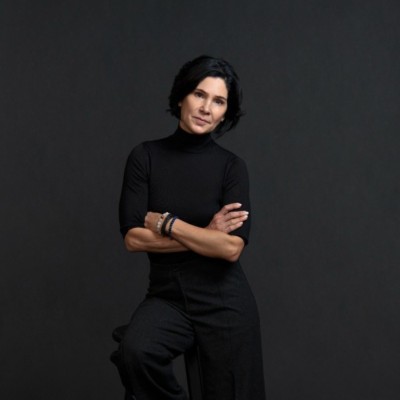
At San Francisco's Bay to Breakers race, where participants regularly run entirely nude and the anything-goes costume culture has been a fixture for over a century, the more notable outfit choice on May 17 was a clean white pair of briefs. The look was a deliberate choice for the 16 members of the Bay Area Run Club, a mix of nurses, chefs, and tech workers who navigated the historic route in their underwear in coordination with tech-enabled laundry service Rinse. The activation marked a deliberate move by the company to use a local cultural moment as a vehicle for something larger than free swag, positioning outsourced laundry as a way for busy professionals to reclaim their time and pursue what actually counts.
In close partnership with Rinse’s internal and external creative teams, the operation is led by Jennifer Betka, Chief Marketing Officer at Rinse. Named one of the 100 most influential CMOs, Betka has spent her career working across media, technology, and commerce. Across previous roles, she propelled Fandom from $10M to $150M in revenue, recaptured 30% of the North American market share at StubHub, and secured the #1 position on CNBC's Top 50 Disrupter List for Indigo Ag. Now at Rinse, she views the transformation of a laundry chore into a tech-enabled commerce platform as a question of what the service actually enables for its users.
"Our work is designed to speak to somebody's mind. The activation was designed to be a part of a cultural moment, build trust, and connect with the Bay Area in a way that respected their intellect and sense of humor. It was all true, and nothing we did was gimmicky," says Betka. Anchored to the brand's "It's Time to Be Great" tagline, the activation operates as a physical manifestation of what Betka views as the company's core promise: helping people optimize the routines that consume their week. Putting runners on the street in their underwear translated that abstract idea into something tangible, making the case for outsourcing in a way no paid media spot easily could. "We aren't just giving people laundry and dry cleaning," Betka notes. "We're giving people space to run faster towards whatever is meaningful in their life."
The 'punctuation moment' playbook
While many brands are experimenting with immersive brand activations, the standouts are those capitalizing on massive localized events to break through digital noise. Betka's cultural activation strategy hinges on aligning three variables: market priority, calendar timing, and local tradition. For the Bay to Breakers activation, all three lined up to reach the exact demographic Rinse's service benefits most. "San Francisco is an important market for Rinse, and Q2 was when we planned to move more of our attention into the Bay Area," Betka explains. "Bay to Breakers is an exciting cultural tradition. We had to figure out how to speak to the city in that moment in a way that goes beyond traditional out-of-home channels to really touch the community."
For modern marketers, moving past passive sampling means choosing authentic community connection over standard giveaways and table setups. Rinse deliberately leaned into storytelling over sales by building a clever conversation starter, cheekily titled "Underwear You Never Have to Wash," which invited spectators to actively process the brand's value proposition. The setup sparked curiosity and prompted immediate self-selection, with the team layering in messaging about giving spectators their Sundays back. "Their brains were working," Betka says, noting that when spectators inevitably asked how the service worked, the team transitioned each interaction into a real-time sidewalk funnel, capturing unprompted consumer validation with reactions like, "I need that."
Some brands are finding that translating event buzz into business value requires blending physical activations with digital commerce and backing it up with robust SMS infrastructure for post-event retention. Betka treats high-visibility events as top-of-funnel triggers designed to feed an established macro marketing architecture, where each activation lives inside a larger system rather than standing alone as a singular moment. The discipline is in the integration, not the spectacle itself. "We call it 'punctuation moments', where there is a heightened opportunity to appreciate Rinse in a local, cultural, or subject-wise context," Betka says. "The idea of a punctuation moment is that it goes high and then it brings that back in. Its role is to tune into a community and content moment as contextually as possible, while remaining woven into the fabric of our 'It's Time to Be Great' platform."
From utility to life design
Betka traces the confidence to execute the spectacle back to qualitative primary research conducted long before any runner laced up. The work paid off in unexpected ways, including internal validation from a seven-year Rinse employee who noted the on-the-ground energy felt tangibly different from past campaigns, while the 30 runners themselves are now being studied as a new customer cohort to inform Rinse's future strategy. The throughline from research to runway suggests effective experiential marketing depends on knowing exactly who you are trying to reach. "I spoke with a couple dozen customers in live recorded sessions because I really wanted to understand who they are," Betka says. "That led directly into our expression of the ideal prospective customer, which led us to all of the things that showed up at Bay to Breakers."
Beyond the strategy itself, the activation lands because it speaks to a very relatable reality of modern burnout and packed schedules. The brands positioning themselves to win this moment are evolving their value propositions from basic utilities into everyday tools that help people design how they spend their time. Betka sees Rinse's strategy as a case study in that exact pivot. "I view the work Rinse is doing as part of a broader shift beyond a simple convenience orientation and much more toward modern routine and life optimization," she concludes. "We are operating in a space that extends far beyond convenience, where people recognize the need to set their lives up to work in support of their pursuits."