
All articles
Operational Ownership Defines the Modern CMO Role Across Brand, Channel, and P&L
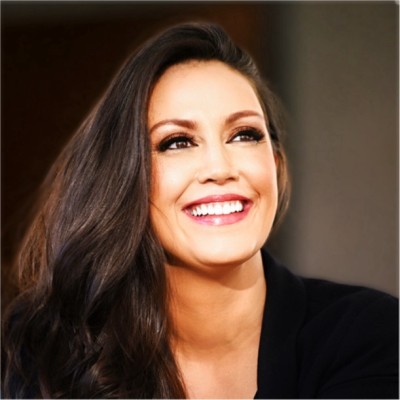
Behave Bras Founder and recent iRobot CMO Athena Kasvikis on the expanded mandate reshaping the modern marketing leadership role.
Make The CMO Wire one of your go-to sources on Google

CMOs tend to get put into boxes, but those boxes are wildly meaningless when it comes to not just marketing, but overall brand management.
The traditional CMO job description of a senior brand steward who owns campaigns, creative, and messaging has fallen behind the work the role actually does in the market. Modern CMOs are expected to own consumer insight, channel execution, commercial judgment, and operational problem-solving as a single integrated function. Customer experience, product strategy, and sales enablement all hit the CMO's desk because all three shape how consumers actually encounter the brand.
Athena Kasvikis embodies this modern hybrid approach. She's the Founder and CEO of Behave Bras, which she launched after appearing on Shark Tank, and most recently served as CMO of iRobot, where she led the company's marketing operation through a turnaround that included a strategic sale process. She spent her early career in brand management at Procter & Gamble before holding senior marketing roles at Unreal Snacks, Ciao Bella Gelato, and Kill Cliff. That career arc has shaped a sharp view of how narrow most companies' definitions of the marketing function still are.
"CMOs tend to get put into boxes, but those boxes are wildly meaningless when it comes to not just marketing, but overall brand management," Kasvikis asserts. The expanded mandate is what the iRobot turnaround actually required, and it's just one example of what almost every modern CMO role increasingly demands.
The forced role expansion
Kasvikis joined iRobot in 2025 and within a few weeks, was informed that the Board of Directors had initiated a strategic review of the company to evaluate a broad range of alternatives, including exploring a potential sale or strategic transaction. For Kasvikis, the remit instantly expanded beyond restoring the brand to its beloved status. "On top of that, it was 'By the way, we also have to make sure that this is going to turn into a fully salable, valuable brand asset.' I said, 'Alright. Slight adjustment.'" What iRobot needed in that moment was a CMO who could function as a chief brand officer, a chief commercial officer, and a product strategist at the same time. The business problems did not respect the org chart.
The experience reframed Kasvikis' view of what marketing leadership actually requires. "Marketing is the easiest part of my job because I only have to understand the consumer. The business side is where expectations are crazy, and every day you get to decide if you want to add value."
Consumer insight buys the right to push back
In Kasvikis' view, the CMO capability that underscores all other functions is owning the consumer better than anyone else in the building. That ownership is what makes everything else possible, including the right to push back on agencies and partners who use tactical complexity as a delay tactic. A recent example with a creative agency illustrates the dynamic. The agency proposed a monthlong testing cycle for new ad creative. Kasvikis had run similar campaigns herself, and said so. "They said, 'It's going to take us at least a month.' I said, 'No, it's not.' I knew we could do it in seven to fourteen days and get the same data."
The pushback only works if the CMO has actually executed the channel. "Knowing how to talk back to an agency because you've pushed the buttons yourself is a skill, and it's one that many people who have only worked in corporate don't have." Kasvikis believes that tactical fluency is one of the clearest dividends of entrepreneurial experience inside the CMO seat. Founders learn the mechanics of every channel because no one else is there to run them, and the muscle stays useful long after the team grows around the role.
The broader principle is restraint paired with capability. Though CMOs do not need to push the buttons forever, they need to know how so the team underneath them executes against the right standards.
"We need AI" is not a strategy
The same operational clarity applies to AI. At iRobot, Kasvikis pushed back when she felt the conversation was drifting into buzzword territory. "They were saying 'We need AI.' But AI needs to actually be useful." The applications she committed to were specific: combing twenty years of internal consumer insights so the team could stop running redundant studies, monthly sentiment analysis across major markets, and AI-generated product imagery to replace expensive CGI cycles. Each application earned its place by addressing a real constraint. The applications she declined were equally specific. AI would not write the creative brief for the lead agency, for example, nor would it make the call on whether a product moved forward. "Don't just ask me what we're doing with AI. You need to solve a business problem. Here's how I'm going to use it to solve business problems, and here's why I won't be using it." That same framework, she says, should apply to every emerging capability marketing leaders are pressured to adopt.
Looking forward, Kasvikis says the place of a modern marketing leader is no longer solely as the steward of a nebulous brand. It is the operational ownership of how that brand actually generates revenue, and the CMOs that deliver disproportionate value are the ones who can read the P&L, identify where every other function contributes to it, and run the marketing organization as a business unit rather than a creative department. "I look at marketing like I'm an entrepreneur. Do I believe that within this bundle of money that I can deliver this amount of revenue with the right customers? If I don't believe it, we're not doing it. I tie all marketing and branding to the bottom line."