
All articles
David's Bridal Is Turning Marketing Alignment Into a $100B Wedding Expansion Strategy
Elina Vilk, President and CBO at David's Bridal, shares how aligned operating rhythms and Pearl AI turn 90% bride reach into a wedding-wide growth engine.
Make The CMO Wire one of your go-to sources on Google

We didn't start with 'there's AI, now let's build an AI for weddings.' We started with the biggest problem to solve in weddings, and it was stress.
Nine out of ten brides walk through the David's Bridal ecosystem. For decades, the company focused solely on selling dresses to that audience. While the wedding dress TAM is a healthy $4 billion, the overall wedding TAM is a staggering $100 billion. The gap between those two numbers represents the single largest growth opportunity available to the brand, and capturing even a fraction of it requires a structural overhaul of how marketing, sales, e-commerce, and partnerships work together, what they measure, and how they think about the customer they're serving.
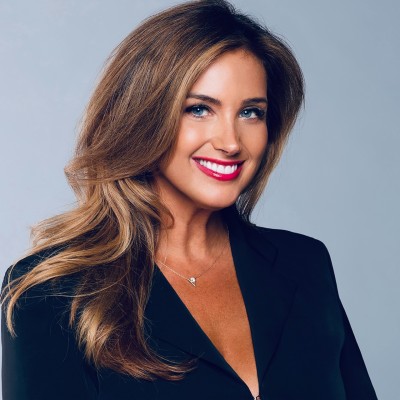
Helping lead that evolution is Elina Vilk, President and Chief Business Officer of David's Bridal. Since joining the company in 2024 after leadership roles at Hootsuite, WooCommerce, Meta, PayPal, Visa, and Yahoo, Vilk has worked alongside CEO Kelly Cook and the broader David's Bridal team to expand the brand's role beyond dresses and support customers throughout the wedding journey. Her team is executing on that goal with an AI-powered planner, Pearl, alongside ruthless operational alignment.
"What we're trying to do is broaden the scope of problems we solve for brides beyond finding the perfect dress." To get there, Vilk and her team rebuilt the internal operating system first, starting with how teams see revenue, share insights, and decide where to invest.
Diagnose the system, not the symptom
Vilk runs daily revenue standups across both B2B and B2C lines, weekly look-backs, and Thursday business reviews where every channel delivers a five-minute performance snapshot. From those reviews, her team extracts insights, identifies patterns, and builds action plans that are tracked in the daily meetings. She says this level of discipline matters because it prevents the common failure of channel teams optimizing in isolation while missing the systemic issue underneath. "The way I think about it is like going to the doctor who only has 30 minutes to see you," she explains. "They prescribe medication for the symptoms, but they might not be piecing together that there's a root cause across your whole body. That's what happens when an email team says clicks are down and wants more budget for email, or the website team says conversion is down and wants more retargeting spend. Nobody's saying we need a top-of-funnel brand awareness campaign that would float all boats."
To force that systemic thinking, Vilk built a center of excellence for insights staffed by operators from across the business rather than a dedicated analytics team. They meet weekly, share cross-channel patterns, and surface themes that go beyond any single channel's metrics. "These are people who are analytical in nature, but they're operators in the business. The insights they develop are designed to move past the channel and into the DNA of what's actually happening."
To change the business, change the KPIs
Expanding from dresses to the full wedding journey required changing what every team is measured on. Vilk's merchants had spent their careers running unit sales on dresses. Now they're also responsible for men's tuxedo rentals, partnerships, and categories that have nothing to do with bridal gowns. Without a KPI shift, the strategy would remain theoretical. "You are what you measure, so you can't change the strategy without changing the KPIs. That's an executive-level mind shift," she says. The redefined metrics cascade down into daily action. Teams build weekly plans against specific KPIs, monitor them in their daily standups, and adjust in real time based on market conditions, whether that's fewer brides in the market, a blizzard closing stores, or a shift in competitive positioning.
Solving the biggest wedding problem
AI enters the David's Bridal strategy not as a technology initiative, but as the solution to a specific customer problem. Vilk says the biggest friction point in the wedding journey is the stress of planning an event most people have never planned before, making hundreds of decisions under emotional and financial pressure. "We didn't start with 'there's AI, now let's build an AI for weddings.' We started with the biggest problem to solve in weddings, and it was stress. We have these tools we never had before, so how can we use AI to solve this problem differently? That's where Pearl was born," Vilk shares.
Pearl automates the wedding planning process. It generates vision boards in minutes, builds budgets, recommends vendors, sets timelines, and walks brides through each phase of the journey. It's agentic, meaning it can go beyond answering questions and generating plans. "It can read and write. It can set dates, help you plan vendors, all of it." Pearl is designed to work at whatever pace the bride wants, as a five-minute planning sprint or a months-long companion.
For partners and vendors, Pearl operates on a task-based advertising model. When a bride is looking at flowers, she sees florists. When she's researching photo albums, she sees relevant brands. Listing fees and advertising revenue flow through the platform, creating a retail media network built around the wedding journey rather than a single product category.
The bride is the CEO of the household
Vilk frames the value of the bridal audience in terms that extend far beyond the wedding itself. A bride, who makes an average of 300-plus wedding decisions, is simultaneously becoming the primary decision-maker for a new family. She's choosing furniture, toothpaste, food, home goods, and daily brands all during the same compressed window of engagement. "The bride is the household CEO," Vilk says. "She makes 85% of household decisions. The point of household formation is when that starts, and that's why we built retail media at the same time. Reaching this audience at the crucial moment when they're beginning their decision-making process is critical for brands well outside of the wedding industry."
She also points out the amplification effect that surrounds every wedding ceremony. "Throughout your journey as a bride and groom, whether you like it or not, you become an influencer. That's the thing people don't realize. Random people will tell you they saw your wedding photos. They'll probably still be telling you that a year later." A wedding with 75 guests, each with an average social following of a few hundred people, generates millions of impressions for photos from every angle, posts about cake tastings and venue visits, and stories shared long after the wedding day. Whether the bride intends it or not, her wedding becomes a content event with organic reach that most brands would pay heavily to generate.
AI enhances rather than leads
When it comes to positioning AI within her organization, Vilk sees two clear tracks: growth initiatives that use technology to do things that weren't possible before, and efficiency initiatives that use it to accelerate what the company is already doing, from pricing and promotions to inventory management and demand planning. She draws a deliberate distinction between what AI is and what it can accomplish. "You're not investing in AI. You're investing in an initiative that AI can support and make better. It starts and ends with a customer, whether internal or external. What is the problem we're trying to solve? How does AI enhance that?" She says the distinction keeps the organization grounded and serves as a reminder that AI is merely the tool. Revenue alignment, KPI redesign, and cross-functional operating rhythm are the system, and the system is what turns a $4 billion dress business into a platform positioned to capture a share of the $100 billion wedding economy.