

All articles
Drop Culture Meets Data Discipline as Hat Club Aligns Outreach to Customer Intent
Hat Club Senior E-commerce Manager Derek Marsh on how behavioral signals, product affinity, and timing turn personalization into revenue.
Make The CMO Wire one of your go-to sources on Google

Once you layer things like frequency of visits and drop engagement, you stop messaging on fixed schedules and start aligning with actual hype cycles.
The gap between personalization that converts and personalization that just looks personalized is wider than most marketing teams realize. Inserting a customer's name or favorite team into an email is the baseline. The differentiator is knowing whether someone is a drop buyer or a team buyer, whether they prefer fitted caps or snapbacks, whether they're warming up to purchase or just browsing, and timing the outreach to land at the moment intent peaks rather than when the campaign calendar says to send. That level of precision depends on clean data, unified systems, and AI that's trained on the brand's actual catalog and tone rather than generic conversion templates.
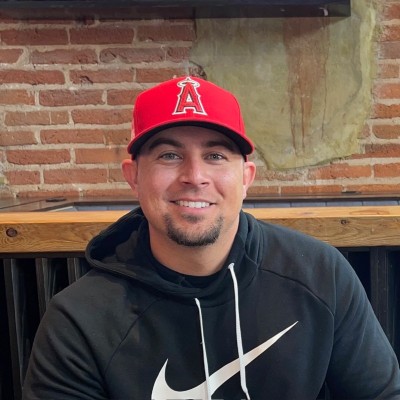
Derek Marsh is the Senior E-commerce Manager at Hat Club, the member-based retailer operating nine stores across Arizona, California, Texas, and New York alongside a global e-commerce business. Marsh manages the full digital marketing stack, from paid social and email to app engagement and product drops, for a brand that competes directly with Lids and Fanatics while maintaining the hype-culture identity and community loyalty of a streetwear label. In his view, the real marketing unlock comes from combining behavioral signals with product affinity, not just static segments.
"Once you layer things like frequency of visits and drop engagement, you stop messaging on fixed schedules and start aligning with actual hype cycles," he says. That alignment is where personalization starts producing revenue lift rather than incremental improvements on vanity metrics.
AI works when it's trained on the brand
Hat Club's strongest AI results have come from Tapcart's AI messaging tool, launched in March, which Marsh credits for producing copy that matches the brand's tone and pushes the right products. The distinction from earlier AI tools is specificity. "The difference comes down to how well the model is trained on your product catalog and tone. A lot of tools still feel like they're optimizing for generic conversion language instead of brand voice," he notes.
He sees the lift show up most in push and in-app messaging, where customer intent is already high and AI's job is to reinforce an existing signal rather than create one. "It's less about new creativity and more about not breaking what already works." That framing matters because it resets expectations for what AI should be doing inside a retail marketing stack. Rather than a wholesale replacement of the creative process, its value lies in executional precision at the moment of highest intent.
Segmentation drives revenue when profiles are clean
Hat Club segments its audience across drop buyers, team buyers, silhouette preferences, store-versus-online behavior, and messaging engagement data. The segmentation produces value because the profiles underneath it are maintained with enough discipline that the system can reliably distinguish between a customer who is ready to pull out their credit card and one who is passively browsing. "What really matters is timing," Marsh says, "knowing when someone is warming up versus just browsing. That's where personalization actually becomes revenue-driving instead of just feel-good segmentation."
Marsh pairs that behavioral layer with predictive purchase-window tools that help time outreach around hype cycles rather than fixed promotional schedules. For a brand built around limited-edition drops, that timing alignment is the difference between catching peak intent and arriving after the moment has passed. He says the same data hygiene discipline applies to every other personalization layer. "Most brands underestimate how messy their segmentation really is. If identity or lifecycle data is wrong, personalization just turns into expensive noise instead of performance lift."
Loyalty is becoming an infrastructure play
The traditional loyalty model of earn points, redeem rewards, is not where Marsh sees the retention opportunity. Hat Club's app includes fantasy football and pick'em-style engagement designed to keep customers interacting with the brand even when they aren't shopping. "We want people engaging with us even when they're not buying hats. That's what builds long-term loyalty."
The next step is website-level personalization through Visual I/O, where the site experience adapts to the customer's profile. A Dodgers fan sees Dodgers content first. A drop buyer sees hype releases. The move shifts personalization from messaging into the UX layer, which is a bigger technical lift but where Marsh believes retention gains actually live.
Triple Whale provides the attribution and behavioral data that ties the system together, and Marsh frames the integration as the shift from loyalty-as-rewards to loyalty-as-intelligence. "If you unify identity and behavior, it becomes the backbone for personalization everywhere else."
AI visibility is the new discovery layer
Hat Club is also investing in how AI surfaces its products upstream of the purchase journey. Using Cognizo, the team tracks how the brand shows up in AI-generated product recommendations and optimizes content to improve that visibility. "We're starting to treat this less like SEO and more like structured product education. FAQ pages, PDP content, and clear product descriptions tend to get picked up fastest," he explains.
The content that performs best in AI environments is straightforward: collection pages with clear titles, structured product detail pages, and FAQ-style content that maps customer intent to specific products. Marsh has seen visibility results within 48 hours and benchmarks performance against competitors.
The discovery layer has not replaced paid ads, Instagram, TikTok, or Google Shopping as first-touch channels, but it is starting to influence how people find products before they hit those channels.
Email still carries the narrative
Interestingly, the channel that ties the system together is the one most often declared dead. Marsh sees email as one of the few owned channels where a brand can control narrative depth, using it for product drops, athlete stories, in-store experiences, and content that reinforces the same assets showing up across social and the website. "The mistake is treating it like a promo feed instead of a content channel," he says.
His clearest takeaway for marketers is that ultimately, the performance improvement comes from consistency across channels rather than optimization within any single one. "When channels reinforce each other, performance improves because the customer sees one unified story instead of fragmented messaging."