
All articles
Reactivation Campaigns Perform Better When The First Contact Costs The Customer Nothing
Sean Reyes, CMO at Armatus, explains how a free repair reaches lapsed customers that no discount campaign ever gets to.
Make The CMO Wire one of your go-to sources on Google

Unless dealerships can clearly differentiate themselves in the market, consumers still see dealers as a distribution point, so price is the only thing that matters.

Most brands try to win back lapsed customers by offering a discount. It rarely supports long-term retention, and it teaches those customers to hold out for the next one. Auto dealers have found a different way in. When a car has a safety defect, the manufacturer covers the repair, so the dealership can contact someone it lost years ago and offer something free that the person actually needs. More than half of the customers who show up for that repair pay for other work while they are there.
Sean Reyes is Chief Marketing Officer at Armatus, which improves retail warranty reimbursement rates dealers receive from the factory when warranty work is performed. Recalls fall under warranty work, even when the vehicle itself is no longer covered by a factory warranty. Reyes has spent more than three decades in marketing and business development across automotive, healthcare, finance, and technology, with earlier consulting work for brands including American Express, Toshiba, and BMW. For the past 17 years, his work has involved helping dealer groups answer a question their customers are already asking, which is what separates one store from the next.
"Unless dealerships can clearly differentiate themselves in the market, consumers still see dealers as a distribution point, so price is the only thing that matters," says Reyes. When a customer sees no difference between two stores, the cheapest one wins by default, and every discount confirms that read. The way around it is to contact people about something they need, whether or not anything is on sale. For a dealership, that is an NHTSA (National Highway Traffic Safety Administration) recall, which can only be performed by a franchised dealer. For other companies, it might be a warranty about to expire or a subscription tier the customer is overpaying for. Each of those gives a business something to say that stands up without a discount attached, which is why so much budget has moved toward retention over the past ten years.
Finding the invisible
A good reason to make contact does not stay good. Recall repairs mostly happen in the first three years after a defect is announced, and the number barely moves after that. Cars also stay on the road close to 13 years now, so the group of owners carrying an unresolved defect keeps growing while the chance of resolving any single one shrinks.
The people most worth reaching are also the ones a dealership has the least information about. An owner whose warranty ended four years ago has been going to an independent shop since, and those shops do not check for recalls, so nobody has told the person anything is wrong. Others bought the car secondhand or moved into the area and never entered the dealership's system. "Maybe they purchased the vehicle in the used car market. Maybe they're invisible to your dealership because they've never been there and just don't show up. So how do you find them?" says Reyes.
Reyes says brands have to rely on the factory recall outreach or look outside their own customer records. Those records only hold people who have already bought something, so reaching anyone else means licensing outside data on who owns what nearby and matching it against the problem the company can solve. That produces a list of people the business had no record of, which is a different exercise from the omnichannel identity work most teams already do on the customers they have. For anyone who cannot be matched, Reyes also suggests turning to broader community outreach, including social platforms, which reach people a company has no way to address one-to-one.
The expense is in keeping that information accurate, and it takes the same discipline retail teams apply when they build a data foundation before running anything personalized on top. A message to someone who sold the product three years ago costs exactly as much as one that lands.
Guessing the channel
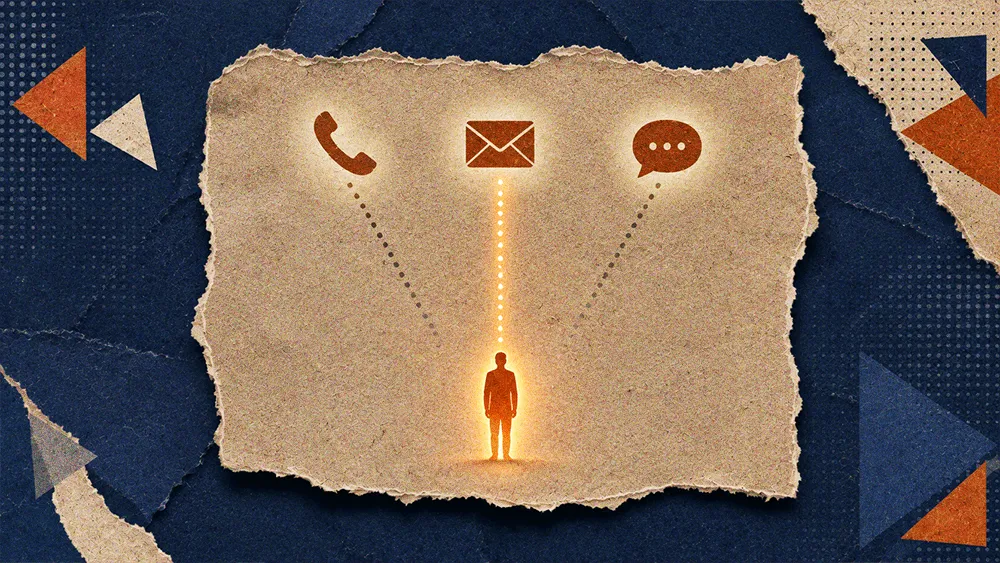
Contacting someone with no history at a company means guessing which channel they will answer, and age is usually the only clue on hand. "We've got the boomers who need to get their direct mail piece, or they need a phone call from a live person. You've got this young Gen Z population that doesn't use the phone for voice conversation, they would rather see text. And then you've got the Gen Xers and the millennials in the middle who are okay with email. You should be looking at multiple channels and multiple touch points," says Reyes.
Age is a rough proxy, and every lifecycle marketer knows it, since plenty of 70-year-olds text and plenty of 25-year-olds ignore one. It works as an opening guess and stops carrying weight the moment someone answers, because the channel they replied on says more than their birth year ever did. That handoff is what most modern programs are built around, moving past static segments as soon as there is real behavior to work from.
Running several channels only pays off if each one reaches a different person. Sending the same message four ways to the same person is how a company gets ignored on all four. The spread is worth funding because these are the channels a business controls outright. A platform can change its rules or its rates whenever it likes, and a company's own mail, email, and text lists sit outside that risk.
It’s also important to note that communicating to vehicle owners is subject to federal consumer privacy laws. If these individuals have not been into the dealership in a while, the communication is limited to just the safety recall notification. Dealers are not allowed to promote other services or vehicle sales information. Some vendors who manage these communication services for dealers can indemnify dealers against any potential suit.
Trust precedes the upsell
Reacquiring a customer costs money, so the visit itself carries more weight than the outreach that produced it. Handle what they came for first. Everything else gets ranked by what the customer needs, not what it earns, because when someone can only afford two of the eight things a company recommends, the company decides which two, and the customer notices which way it went. Lifecycle teams find the same pattern when they lead with value first, which is that the customer who was not sold to buys more. "There is a fine line from we want to protect you from the dangers of a recall to we're profiting from recalls," says Reyes.
That conversion rate holds because nobody pitched the customer on the way in, and the work gets recommended once the problem they arrived with is already handled. Reyes cautions against expecting all of it up front. Some buy on the spot, and others come back a year later, which means the results have to be measured over a longer period than a single visit.
None of this works if the experience on the other end is poor. Bringing someone back into a service department that mishandles them costs the outreach budget to remind a lapsed customer exactly why they left.
AI sharpens the shopper
Customers now arrive knowing more than the person selling to them expects. Roughly four in 10 consumers used an AI tool while shopping in the past month, mostly to compare options and narrow a list before deciding anything. "With the Internet and AI, the average consumer is a lot sharper about what to ask, what to look out for," says Reyes.
What decides the purchase has not changed. "For the most part, it boils down to reputation. Social sharing and interactions that occur in a social environment still matter a lot. A referral from somebody who's purchased a vehicle from a local dealership matters," says Reyes. AI speeds up the research and returns the customer to the same signals that always settled it, which makes each review and referral count for more. Marketers are adjusting to that as AI-written summaries pull those signals into the answers customers see first.